Saturday, January 19, 2013

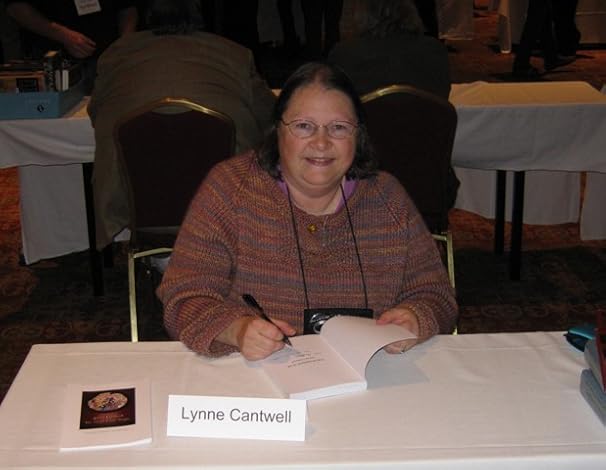
#OBBigBang Orangeberry Big Bang - Tapped by Lynne Cantwell

OLYMPUS DIGITAL CAMERA

Updated on 28th December 2012

Page 1 > Page 2 > Page 3 > Page 4

>>>Amazon Listmania

>>>GoodReads Listopia

>>>Giveaway

Tell us a bit about your family. I’m the youngest of two children. My parents have both died – Dad in 1984 and Mom just a few years ago. They were both 42 when I was born, which was quite old for parents in the ‘50s. I’m divorced with two daughters, both in their 20s, one of whom is a prolific fanfiction writer.

What is your favorite quality about yourself? The older I get, the more confident I feel about my opinions, and about voicing them. I’m no longer as scared of offending someone when I speak my mind. I think that probably shows in my writing, too.

What is your least favorite quality about yourself? Probably my preference for all the foods that are bad for me!

What are you most proud of accomplishing so far in your life? I’m most proud of getting my books into print, and even selling some of them to people I’ve never met.

What is your favorite color? Turquoise in all its variants, running from the lightest to a teal blue.  Purple runs a close second.

What is your favorite food? Chocolate is the easy answer, but lately I’m leaning toward pizza.

What’s your favorite place in the entire world? Colorado, particularly Denver and the Rockies.

How has your upbringing influenced your writing? I think it encouraged me to stick it on the back burner for too many years. When I was younger, I wanted to be a musician, and my mother encouraged me to develop another career that would give me “something to fall back on.” That’s practical Mom advice, but it carries a subliminal message that creativity doesn’t pay – a message that I internalized to the point that I spent many, many years concentrating on making enough to live on and neglecting my creative side.

Do you recall how your interest in writing originated? Sure. The kid who sat in front of me in second grade brought in a “book” he’d written and illustrated. I thought to myself, “I could do that.” So I did.

How long have you been writing? I wrote all throughout grade school, high school and college. I stopped writing fiction when my daughters were young and while I got my journalism career off the ground. I picked it up again when I went to grad school, and then put it away for several years after the divorce. I started writing seriously again in 2008.

When did you first know you could be a writer? When I was still in grade school, my mom got me an appointment with a guy who turned out to be a representative of a vanity publisher. He didn’t accept any of my work for publication (a blessing, in hindsight), but he told me to keep writing.

What genre are you most comfortable writing? I feel most at home when writing fantasy, probably because that’s what I tend to read for fun. I tried writing straight contemporary fiction when I was in grad school but the stories all seemed blah to me – no magic!

What inspired you to write your first book? My very first book was a piece of juvenilia inspired by the Nancy Drew mysteries. Trust me, you don’t want to read it.

What made you want to be a writer? You know how sometimes when you’re reading a terrific book, you get all caught up in it, feeling everything the characters feel? And then you look up and realize how much time has passed? Writers are the people who get you to that place. We get to feel that intensity for the first time, while we’re creating the story. Who wouldn’t want to do that for a living?

What do you consider the most challenging about writing a novel, or about writing in general? Finding the time. And as a corollary, explaining to friends and family that you’re unavailable because you’re writing.

Did writing this book teach you anything and what was it? For Tapped, I did a lot of research on the Lakota and on the Pine Ridge Indian Reservation. I also had to piece together what a Wolf Dreamer was, and his significance to the tribe.

Do you intend to make writing a career? Yes, the gods willing!

Have you developed a specific writing style? All those years in radio news have made me a very lean writer. I shy away from adjectives and adverbs, and my sentences are rarely complex. The Pipe Woman Chronicles seem to lend themselves to this “just the facts, ma’am” style; the first book in the series, Seized, practically wrote itself.

Have you ever had writer’s block? If so, what do you do about it? All those years as a journalist have beaten writer’s block out of me. Give me a deadline and I’ll write you what you need.

How did you come up with the title? Seized was pretty easy. It suggests both the way White Buffalo Calf Pipe Woman chose the main character, Naomi, and also the way Naomi’s life has been altered by the goddess’s intervention. I wanted the rest of the Pipe Woman Chronicles’ titles to be similar, and so I’ve had to spend varying amounts of time with the thesaurus. Tapped gave me quite a bit of trouble, but in the end I settled on it because of its double meaning in relation to the plot: Naomi goes to the taproot of one-half of her heritage, and the villain taps into a major aquifer to wreak his havoc.

Can you tell us about your main character? Naomi Witherspoon grew up working-class poor in Indiana, the only child of a single mother. Naomi went to law school in Denver, and stayed in Colorado afterward. When the series opens, she’s working as a mediator at a major regional law firm and newly engaged to a fellow attorney. Then White Buffalo Calf Pipe Woman contacts her, telling her that She wants Naomi to mediate peace in heaven between Jehovah and the pagan pantheons. After that, her whole life turns upside down. Among the things she discovers is that her father, whom she’s never met, is a Lakota Indian. In Tapped, she and her best friend Shannon go to the reservation to try to find him. Needless to say, Naomi learns as much about herself on this trip as she does about dear old dad.

Who designed the cover? I did. I found the fractal owl that became the artwork for Seizedon a stock photography site, along with a fractal wolf that I doctored somewhat for the cover of Tapped, and a photo that will be the cover of book 5. I found a utility for GIMP that did the same sort of thing to regular photos, which is how I created the artwork for the covers ofFissured and book 4. This from a woman who got a C in eighth grade art class.

Will you write others in this same genre? An excellent question. The first draft of book 4 is done and I intend to write book 5 this spring, with both of them out by June first, the gods willing. I’m deliberately not thinking about what I’ll tackle after that. But I’ve enjoyed writing this series so far, so yes, I’ll probably write more urban fantasy.

How much of the book is realistic? Hmm. Define “realistic.” The locations are certainly real, and I like to think the characters’ feelings and relationships with one another ring true.  As to whether the gods are real….

Have you included a lot of your life experiences, even friends, in the plot? I think it’s fairer to say that my life experiences have informed the plot.  I know a little bit about a lot of the things that happen in the Pipe Woman Chronicles.  But I haven’t modeled any of the characters after anybody I know, if that’s what you’re asking.

Have you started another book yet? Yup! The first draft of book four, Gravid, is done, and I intend to begin editing it this month.

Where do you see yourself in five years? I like to say that I’m on the seven-year plan. I’ll be 62 and eligible for early retirement in 2019 (go ahead and do the math, I don’t care). I plan to stay in my current job until then, or until my writing income matches the income from my day job, whichever comes first.

What contributes to making a writer successful? Being realistic about your chances for making a living at it – and sticking with it anyway. And too, being attentive to your own definition of success. If you define success as making buckets of money the easy way, by sitting on your butt all day and making stuff up, you’re going to be disappointed.

Do you have any specific last thoughts that you want to say to your readers? Thanks for coming along for the ride! I hope you’ll enjoy the rest of the trip.

When you wish to end your career, stop writing, and look back on your life, what thoughts would you like to have? I’d like to think that I’ll be satisfied with what I’ve accomplished, that I’ve been true to my beliefs with my work – and yet unsatisfied that I couldn’t have written just one more book.

Buy at Amazon

Genre – Urban Fantasy (PG13)

Connect with Lynne Cantwell on Facebook & Twitter

Blog - http://hearth-myth.blogspot.com/

#OBBigBang Orangeberry Big Bang – Writing Advice for Teens: Creating Stories by Mike Kalmbach

When all you have is a blank page, it’s often tough to begin writing.

Writing Advice for Teens: Creating Stories aims to help you overcome that initial hurdle by making it easy for you to write down simple, focused ideas and craft them into stories.

However, coming up with ideas is not enough. Teen writers need to understand basic story structure so they can avoid typical writing problems.

Filled with plenty of tips, advice, and examples to help any teen writer, the first book in the Writing Advice for Teens series focuses on getting ideas down quickly and pounding out that first draft. After following the advice and using the techniques outlined in this book, you should understand how to bring the stories locked in your mind to the surface.

Buy at Amazon

Genre – Non-Fiction (G)

Connect with Mike Kalmbach on Facebook & Twitter

Website - http://mikekalmbach.com/

Friday, January 18, 2013

#OBBigBang Orangeberry Big Bang - Rise of the Retics by TJ Lantz

Updated on 28th December 2012

Page 1 > Page 2 > Page 3 > Page 4

>>>Amazon Listmania

>>>GoodReads Listopia

>>>Giveaway

Tell us a bit about your family. I’m married to a wonderful woman named Maya. We live in York, Pa where we are both full time inner-city teachers. We have 6 furry, four-legged children: three dogs (Sadie 13, Rigby 8, and Angus 5) and three cats (Grimlock, Molly, and Pumpernickel). All six animals were rescues, something we believe very strongly in. in our spare time we enjoy hiking, bowling, and refusing to rake our leaves in order to see how angry our elderly neighbor will get.

What is your favorite quality about yourself? I like my ability to see the funny side of even the darkest situations. This tends to come out a lot in my writing, as it can be going along dark, dangerous, and exciting, and then all of a sudden I’m cracking an impromptu and likely inappropriate joke. I can understand how it might annoy some readers, but it certainly keeps me entertained! Besides, I strongly believe that a writer should be both his own biggest critic, and his own biggest fan.

What’s your favorite place in the entire world? My hot tub, it’s where I do my thinking and book planning.

How has your upbringing influenced your writing? Well I attended an all-boys Catholic prep High school, so of course I like to make the Church the villain in most of my work. Since Rosehaven is set in 1503, it’s not bias, it’s historical!

Do you recall how your interest in writing originated? In high school, a group of friends and I began using this new-fangled invention called “email” to create a satirical newsletter for our classmates. We mocked politics, celebrities, social structure. It was like a less structured version of “The Onion”. Looking back, I wish we had stuck with it, because I’d probably be a millionaire by now.

What genre are you most comfortable writing? I enjoy Historical Fantasy because I get to make the rules for characters and plot and they don’t have to adhere to a preset notion of what the world should be. As well, my undergraduate degree is in History, so I have a strong background in medieval and renaissance era settings- at least enough that I can relate plot to major historical events (The Spanish inquisition in Rise of the Retics)

What inspired you to write your first book? Divine Intervention. A winged creature, wreathed in golden light, brought forth the plot with a single simple command- “If you write it, they will come.” I’m a bit hazy on the details, as I had consumed an abundance of tequila that evening.

Who or what influenced your writing once you began? My wife influenced me to keep writing until I finished the novel. Some nights she wouldn’t even let me have food, water, or sleep. (By the way, if anyone is reading this please call the police. I’m chained to a computer in the basement)

Can you tell us about your main character? I have two main characters transposed against each other. Jaxon Miniheart is a creature born of the contract union of an evil Demon lord and innocent human farm-girl. Thought from birth to be a being of extreme evil, the mischievous Jaxon begins to act in the way society expects until he meets his first, and so far only, friend- Tyranna Wolfskin. She is a shape-shifter raised in a monastic lifestyle to respect all life, even if it has horns and a spade tipped tail. Together they work together to navigate a time of troubles heading to Rosehaven.

Who designed the cover? Dan Coleman, a graphic designer and long-time friend of mine. He wanted to create the essence of darkness and adventure that the book entails, while showing the reader that this is not your typical fantasy (You will not find Vampires or werewolves in my books, and while I have Fairies, they run a casino and protection rackets.)

Why did you choose to write this particular book? I wanted to create a fantasy story rooted in mythology, history, and anthropology. I also wanted it to become a movie so I could be rich enough to buy a small private island. The sequel should get me a jet.

What was the hardest part about writing this book? Trimming it into a YA sized story. Original draft was well over 400 pages, and over a few months and some overly critical beta readers, we managed to trim and rewrite down to 285, a much more manageable size for my intended audience age of 8-15.

How do you promote this book? Usually I stand outside my house in my underwear and yell as loud as I can, but I’ve begun to think that I may need to change my marketing strategy.

Will you write others in this same genre? Certainly, I have already created an episode based serial about one of the characters, Gnipper Tallhat, a young gnome trying desperately trying to earn the respect she needs to be granted her own tall pointy hat.

Is there a message in your novel that you want readers to grasp? I deal with many themes involving racism (or in this case speciesism) that try to teach kids to look beyond skin color and pointy white horns, to a creatures true self. As well, I push the idea that in the right situation anyone can be a hero, regardless of their upbringing. I’m very into the idea of individuals working together on their own accord for the greater good.

Have you included a lot of your life experiences, even friends, in the plot? Without a doubt. Jaxon Miniheart was based on a fraternity brother of mine. Known far and wide as being the world’s biggest jerk, and a king of pranks and mischief, he was also one of the nicest and most loyal people I’ve ever had the chance to meet. In his own way he was both completely transparent and a façade.

How important do you think villains are in a story? More important than the heroes. I view writing like I view sports- it’s fun to watch your team win, but it’s more satisfying to watch your rival lose.

Who is your favorite author and why? Terry Pratchett, because his humor knows no bounds. He mixes serious and emotional plot lines with whimsical and astute humorous observations. He also has a really great hat.

Can we expect any more books from you in the future? Hundreds, if not thousands! I just need to find an army of squirrels. Than teach them to read, write, and type. After that I’ll have to get them library cards, because I simply don’t have the money to buy enough computers for an entire rodent army. However, once those simple little things are accomplished and my bushytailed servants are pumping out hundreds of pages of Stephanie Meyer level prose every day, then my writing will be unstoppable.

Have you started another book yet? Rosehaven’s second novel has a tentative release date of March 31st, 2013. This is assuming the world is not invaded by aliens. If it is, we may need to push it back a few weeks to account for the coming apocalyptic war.

Where do you see yourself in five years? Dead from a horrific Segway accident while on a humanitarian mission to save penguins in Antarctica. Fortunately for you it means my books will now be rare collector’s items prized by ebayers and reality pawn shop shows around the world. You should pick yours up right now to ensure a great investment in your financial future.

What are your current writing projects now? I’m finishing editing an anthology entitled “Gaia’s Misfits” with some short work from some excellent fantasy authors. As well, I’m completing the second installment of Rosehaven: the Hidden City, tentatively subtitled “The Battle of Sherwood Forest”

Are there any new authors that have sparked your interest and why? I hear T.J. Lantz is fantastic.

What are some of the best tools available today for writers, especially those just starting out? Pens and pencils. Paper is also a good tool, but can be readily replaced by light colored walls or babies.
Do you have any advice for writers? Just stop now. I’m sick of the competition. Put your pen down and let me have a chance! Stop stealing my thunder, Jerk!

What do you do to unwind and relax? I enjoy narrating my own daily life through opera.

When you wish to end your career, stop writing, and look back on your life, what thoughts would you like to have? None, because I won’t stop writing until I’m six feet under the ground. Hopefully, this is because I am dead and not because I have been buried alive by a rabid fan looking to add me to a collection.

Buy Now @ Amazon

Genre – YA Fantasy (PG)

Connect with TJ Lantz on Facebook

Blog - http://rosehaventhehiddencity.blogspot.com/

#OBBigBang Orangeberry Big Bang - Burning Embers by Hannah Fielding


Updated on 28th December 2012

Page 1 > Page 2 > Page 3 > Page 4

>>>Amazon Listmania

>>>GoodReads Listopia

>>>Giveaway

What is your favorite quote, by whom and why? If you try anything, if you try to lose weight, or to improve yourself, or to love, or to make the world a better place, you have already achieved something wonderful, before you even begin. Forget failure. If things don’t work out the way you want, hold your head up high and be proud. And try again. And again. And again!’ by Sarah Dissent, Keeping the Moon

This quote is akin to a lesson I was brought up on which my father used to tell my sister and I whenever we ran into difficulties: ‘If at first you don’t succeed, try, try, again.’

What are you most proud of accomplishing so far in your life? I am proud of having brought up two well-balanced children who have now flown the nest and are both successful in their pursuits.

I am also proud to have fulfilled a dream, which even if it had not been obviously formulated in my mind, was certainly dormant at the bottom of my heart: the dream of becoming a published author.

Can you share a little of your current work with us? Burning Embers, published by Omnificent Publishing, is a contemporary historical romance novel set in Kenya in 1970. It is an evocative and passionate story of coming of age, of letting go of the past, of having faith in a person and of overcoming obstacles to love, set against the vivid and colourful backdrop of rural Africa and its culture.

Blurb: Coral Sinclair is a beautiful but naïve twenty-five-year-old photographer who has just lost her father. She’s leaving the life she’s known and travelling to Kenya to take ownership of her inheritance – the plantation that was her childhood home – Mingo.

On the voyage from England, Coral meets an enigmatic stranger to whom she has a mystifying attraction. She sees him again days later on the beach near Mingo, but Coral’s childhood nanny tells her the man is not to be trusted. It is rumoured that Rafi de Montfort, owner of a neighbouring plantation and a nightclub, is a notorious womanizer having an affair with her stepmother, which may have contributed to her father’s death.

Circumstance confirms Coral’s worst suspicions, but when Rafi's life is in danger she is driven to make peace. A tentative romance blossoms amidst a meddling ex-fiancé, a jealous stepmother, a car accident, and the dangerous wilderness of Africa.

Is Rafi just toying with a young woman’s affections? Is the notorious womanizer only after Coral’s inheritance? Or does Rafi's troubled past colour his every move, making him more vulnerable than Coral could ever imagine?

How did you come up with the title? It came to me one evening while we were having a campfire in the garden and I was watching the incandescent embers. The fire was by no means dead – it was just smouldering there quietly, giving out a strong glow from time to time like the passions of Coral and Rafi, my heroine and hero.

Can you tell us about your main characters? Coral could at first come across as a spoilt brat. But there is more to Coral than meets the eye. She has had a protected upbringing, but she has also had many blows. The abrupt change she had to suffer at the age of nine when she had to leave the open spaces of Africa for the confinement of boarding school in England; the divorce of her parents; the remarriage of her mother; the birth of siblings to this new marriage; and finally, her own broken engagement. All this has made her insecure, and that is why sometimes she reacts so childishly to her surroundings and to Rafi. Even though she is naïve emotionally, and her fiery, passionate and rebellious nature pushes her sometimes to extreme behaviour, she is intelligent and very competent at her work as a photographer, which she takes very seriously. Still, through the book Coral learns to grow up the hard way, and blossoms into an understanding, compassionate and generous woman.

Rafi is the Alpha man par excellence. He is handsome, a successful entrepreneur, commanding, strong and kind. But he is a notorious womaniser and there is a darkness to him that is present all through the book and caused by a troubled past that is reflected in everything he does and says. A passionate man with a strong sense of right and wrong, his love for Coral is so deep that it brings him almost to the door of death.

What is your greatest strength as a writer? I am very disciplined in the planning of my plot. I have a rigid routine which has served me well. Having researched my facts thoroughly, I plan my novel down to the smallest detail. Planning ahead, I have found, makes the writing so much easier and therefore so much more enjoyable. I use my plan as a map. I never set out on a long journey by car without a map, and the same applies to my writing. In order to write I need to see, smell, feel, even taste what I am telling my readers about – it must come from the heart. That is perhaps why my descriptions are so vivid, which I am told is my forte.

Have you developed a specific writing style? I like to write in a descriptive style because that is what my French education gave me and that is what I like most to read. I try to convey to the reader every detail my imagination is conjuring up – all the senses are involved, so that the reader can form a clear picture of the setting in which the plot takes place and grasp a better understanding of the characters and their reactions. I am careful to use the right word and I am always looking for the nuance that will best describe what I am trying to put across. This could be due to the rigorous training of my French education. The nuns at my school, and later my teachers at university, were very strict about style.

Is there a message in your novel that you want readers to grasp? Yes. The messages of my novel are that one should learn how to let go of the past in order not to miss out on new opportunities, and to draw one’s own conclusions rather than being influenced by other people’s point of view.

Do you have any advice for writers? First and foremost, write from the heart. Be true to yourself and don’t compromise to please the market. Markets change, fads come and go; your work will remain.

Research your facts thoroughly. A writer today has no excuse for not getting his/her facts right. Use all the tools available to you. Travel, internet, books, films, documentaries: they’re all there to enrich your experience and make your writing journey easier.

Plan your novel down to the smallest detail. This will make your writing so much easier and therefore so much more enjoyable. A plan is your map. Would you set out on a long journey by car without a map?

Read, reread and reread. Edit, edit, edit. Go through your manuscript again and again and edit it. I know that it will break your heart to delete a phrase or even one word you have spent time agonising on, but sometimes less is better than more. Not easy advice to follow, but in the long run it does work. If you can leave the manuscript alone for a few weeks and revisit it at a later date, reading it as if it were someone else’s, then that’s even better.

What is your favorite food? I am very versatile with my food. I love cooking and of course I love eating – it is one of the main pleasures of life, I think. In my travels I have sampled many different dishes, but even though I have not yet visited China, I must admit that I always look forward to a Chinese meal.

What genre are you most comfortable writing? I am romantic, passionate and imaginative, therefore I write romantic novels, because that is also the genre I most enjoy reading.

How do you promote this book?

Do you recall how your interest in writing originated? Stories and writing have always been part of my life. My father was a great raconteur and my governess used to tell the most fabulous fairy stories – I could listen to them for hours. When I was seven she and I came to an agreement: for every story she’d tell me I would invent one in return. That is how my passion for storytelling began.

At school I consistently received first prize for my essays and my teachers often read them aloud in class. As a teenager I used to write short romantic stories during lessons and circulate them in class, which made me very popular with my peers (but less so with the nuns!). In addition, since a young age I have kept some sort of a diary where I note my feelings, ideas and things that take my fancy (or not).

My grandmother was a published author of poetry and my father published a book about the history of our family, so writing runs in my veins. I guess I always knew that one day I would follow in those footsteps and forge my own path in that field – a subconscious dream which finally came true.

How has your upbringing influenced you writing? I grew up in a rambling house in Alexandria, Egypt, and my bedroom windows overlooked the beautiful Mediterranean Sea. I could see up to the harbour. At any time of day when I looked out of my windows, there was beauty in the scenery. That is where I first experienced the blazing dawns and sunsets, the brilliant azure sky and the ever-changing colours of the sea – silver under the moonlight, almost purple and orange in the early morning or the evening, deep blue in autumn, angry grey in winter and almost turquoise in the spring and summer. My plots are set in warm countries: such vivacious, passionate people, fascinating cultures and wonderful, breath-taking vistas. It is what I know best, what touches me most, so for the time being I will continue to situate my stories in places that bring warmth to my heart.

The French nuns at my convent school, Notre Dame de Sion, and later my French professors at university were very strict about structure and punctuation. Today, I still try to make sure each scene has an introduction, a middle part and a conclusion. I definitely think that my background in French literature has been a blessing. French is sonorous and elaborate and you can’t study the literature without developing a love of words and phrases. I used to spend hours reading a thesaurus, totally engrossed in the nuances of words. Even now, if I am looking up a word, I sometimes find myself just absorbed in the subtle shadings of words – and time just flies by.

What inspired you to write your first book? Burning Embers began not as a story, but as a vivid landscape in my mind. The seed of the ideas was sown many years ago when, as a schoolgirl, I studied the works of Lecanto de Lisle, a French Romantic poet of the 19th century. His poems are wonderfully descriptive and vivid – about wild animals, magnificent dawns and sunsets, exotic settings and colourful vistas. Add to that my journey to Kenya and the enthralling stories of a Kenyan family friend, and it was impossible for me not to be inspired… and when I put pen to paper, Burning Embers was born.

I have had some of Lecanto de Lisle’s beautiful poems translated. You can find them on my website at http://www.hannahfielding.net/?cat=7.

What do you consider the most challenging about writing a novel, or about writing in general? The most challenging parts for me when I write a new novel are the opening paragraph and the closing paragraph. The first must encourage the reader to continue his or her journey into the novel, to want to get to know the characters and their story; and the second must leave the reader with a feeling of contentment and maybe a tinge of melancholy because the voyage has come to an end and it is as if he or she is saying farewell to a friend.

Can we expect any more books from you in the future? I have written a sizzling and sensual trilogy, a romance that is set in Andalucía, Spain, spanning a period that will take the reader from the 1950s to the present day. It is the passionate story of the de Fall family, some of whom have roots in England, and their interaction with the gypsies. A tale of love, treachery, deceit and revenge, a rumbling volcano, set against the fierce and blazing Spanish land which is governed by savage passions and cruel rules.

I have also written a very romantic and touching love story set in Venice and Tuscany in 1979/1980. It opens with the Venice Carnival that has returned after a cessation of almost two centuries. It is a tale of lost but tender deep, ineffable love, dealing with its echoes and learning to love again.

I am now working on a trilogy set in Egypt, which will take my readers from 1945 to the present day, transporting them to a world of deep, ingrained customs and traditions, interesting though often cruel, and making them live through the various winds and storms that blew over this very ancient land.

What do you do to unwind or relax? I am a loner to some extent, and a dreamer, so the beach calls to me. I live part of the year in the south of France, and I love taking long walks on the beach on a sunny spring day. I gaze at the sparkling Mediterranean sea, with its ever-changing shades of blue under the smiling sky, and conjure up romantic stories.

When I am in my home in Kent, I love to cook, especially around Christmas time when I start baking all the delicious pies, puddings and cakes that are special to that time of year. Otherwise, nothing is more satisfying and relaxing than curling up either in bed or in front of a log fire with a romantic novel.

Do you have to travel much concerning your book (s)? Yes, I do, and that is the most exciting part, because it is all about discovering something new. I like to get a feel of the place where my romance novel is going to be set. I need to experience its weather, view its countryside, mingle with its people and try its exclusive cuisine. Every facet of a country helps me to form the setting of a film in my mind, where I can place my characters, knowing that their experience will be genuine and that my story will come from the heart.

Do you intend to make writing a career? Writing for me is not a career. Even if I had not been published, I would have continued to write because writing is my life.

If you could leave your readers with one bit of wisdom, what would you want it to be? Never say die! Never give up!

Have you ever had writer’s block? If so, what do you do about it? One of my favourite quotes about writer’s block is: ‘Biting my truant pen, beating myself for spite: “Fool!” said my muse to me, “look in thy heart, and write.”’ ― Sir Philip Sidney

I have two ways of dealing with writer’s block.

The first one is patience. If you sit there in front of a blank page – and I’ve done that, sometimes for as much as a couple of hours – the muse eventually takes pity on you and visits.

The second one is to get into my car and drive to a place that has inspired me in the past. That also usually works. It might be a garden overlooking the sea, a meadow carpeted with wildflowers if I’m searching for a setting for a love scene, or a café bustling with people where I can find the description for one of my characters.

What are some of the best tools available today for writers, especially those just starting? Apart from the obvious tools that modern life offers to the author today, like search engines on the internet, documentaries, films, libraries and a good knowledge of Word, I think a writer should be armed with what I call the 4 Ds:

Desire to write.

Dedication to allotting the necessary time and effort to your project.

Discipline to keep to strictly set rules.

Determination to succeed.

What contributes to making a writer successful? Writing from the heart! Readers always detect when the writer is not being sincere.


Buy at Amazon

Genre – Contemporary Romance (PG13)

Connect with Hannah Fielding on Twitter & Goodreads

Website - http://www.hannahfielding.net/

#OBBigBang Orangeberry Big Bang – Ten Thousand New Year’s Eves by Dawn DeAnna Wilson


“Imagine this: It’s New Year’s Eve and you’re at a party, in a ballroom, standing beneath a crystal chandelier. At midnight, you look up. On each piece of cut crystal you see an image of someone else’s New Year’s Eve. In “Ten Thousand New Year’s Eves,” Dawn DeAnna Wilson shines a light through that chandelier, illuminating a handful of random (or are they?) characters, luring us in, drawing the lines, revealing a simple but powerful truth–we are all connected.”
—–Billie Hinton, author, “claire-obscure”

About the book

From award-winning North Carolina writer Dawn DeAnna Wilson (author of “Leaving the Comfort Cafe”) comes this novel of tangled lives desperately searching for a new beginning.

Mallory has a neurological condition which causes her to see certain letters in different colors and taste certain flavors whenever she hears sound. The condition is synesthesia, and researchers believe it may be caused by overlapping brain neurons…but try explaining that to her well-meaning but clueless friend Rochelle, who seems to be more concerned with rescuing animals.

Rochelle takes Mallory to New York City for New Year’s Eve to help Mallory forget about the man she has a crush on, and en route to city, their paths intersect other pilgrims seeking a new beginning. All of these characters are connected, yet very few realize the closeness and intensity with which their paths cross—sometimes with disastrous results.

The novel takes the reader from North Carolina to Atlanta to New York City, illustrating that all things are bound together in a web of life—all things connect. What we do to the web, we do to ourselves.

About the author

Dawn DeAnna Wilson is the author of two novels (now on Kindle), “Saint Jude” (Tudor Publishers) and “Leaving the Comfort Cafe” (Wild Rose Press) in addition to a short story collection “Welcome to Shangri-La, North Carolina.” She earned her master’s degree in creative writing and her bachelor’s degree in journalism. Her articles and short stories have appeared in “Byline,” “Writer’s Digest,” “Glass Fire,” and “The Lutheran Journal.”

Links to her short stories may be found on her website: dawndeannawilson.com

Buy at Amazon

Genre – Literary Fiction (PG13)

Blog http://dawn-theyearofwritingdangerously.blogspot.com/

Thursday, January 17, 2013

Book Blast: Freak of Nature - Julia Crane

 
Freak of Nature

Donate Body to Science. Check.
When seventeen-year-old Kaitlyn checked the box, she never suspected she’d have her life–and her body–stolen from her. She awakens one day in a secret laboratory to discover that her body is now half-robot and is forced to hide her own secret: that she still has human emotions and a human mind. If the scientists who made her find out, they’ll erase what remains of who she was.

Kaitlyn finds an unlikely ally in Lucas, a handsome, brilliant scientist who can’t get over the guilt he feels knowing she was once a vibrant, beautiful young woman. He never expected a science project to affect him the way she does. As he tries to help her rediscover her past, he finds himself falling for the brave girl struggling to find her place and acceptance between the human and computer worlds.


Purchase
 
 
Author Julia Crane

Julia Crane is the author of the YA paranormal fiction novels: Keegan's Chronicles, Mesmerized, Dark Promise and Eternal Youth. Julia was encouraged by her mother to read and use her imagination, and she's believed in magical creatures since the day her grandmother first told her an Irish tale. Julia has traveled far and wide to all the places her grandmother told her about, gaining inspiration from her journeys to places like Nepal, Cyprus, Sri Lanka, Italy, France and many more. And who knows? Maybe the magical creatures she writes about are people she met along the way.

Julia Crane has a bachelor's degree in criminal justice. Although she's spent most of her life on the US east coast, she currently lives in Dubai with her husband and three children.

Links
Book Blast Giveaway Details
$50 Amazon Gift Card or Paypal Cash
Ends 1/27/13

Open only to those who can legally enter, receive and use an Amazon.com Gift Code or Paypal Cash. Winning Entry will be verified prior to prize being awarded. No purchase necessary. You must be 18 or older to enter or have your parent enter for you. The winner will be chosen by rafflecopter and announced here as well as emailed and will have 48 hours to respond or a new winner will be chosen. This giveaway is in no way associated with Facebook, Twitter, Rafflecopter or any other entity unless otherwise specified. The number of eligible entries received determines the odds of winning. Giveaway was organized by Kathy from I Am A Reader, Not A Writer http://iamareader.com and sponsored by the author. VOID WHERE PROHIBITED BY LAW.

a Rafflecopter giveaway

#OBBigBang Orangeberry Big Bang - The Riddler by Greg Hamerton


Orangeberry

Updated on 28th December 2012

Page 1 > Page 2 > Page 3 > Page 4

>>>Amazon Listmania

>>>GoodReads Listopia

>>>Giveaway

Have you ever had writer’s block? If so, what do you do about it? I’ve got it right now. ;-) Stories sometimes need time to develop. In the meantime I write something else … which results in some interesting author’s blogs and interviews.

Can you share a little of your current work with us? Because many readers responded to the character of the Riddler himself, I am working on a prequel that explores his early years. In The Riddler’s Gift he appears as a wise and tricky guide; when he’s young he’s both unwise and unguided.

How did you come up with the title? The Riddler’s Gift is a title that begs a question of the reader. Who is the riddler? What is the gift? One might suspect it has something to do with the ability to solve puzzles, to see the truth hidden in plain view. The whole book is an introduction to the major story, Second Sight, when you get to look at things again and realise that the cosy little fantasy tale built around a conflict between dark and light is a bit of a school room, and so the gift was the transformation that comes upon the heroine from being encouraged to look at herself and achieve self-mastery. Some readers won’t see the story in that way, and that’s okay too, for them it’s just a catchy title.

Can you tell us about your main character? I have five main characters, because it is more interesting to see things develop from different points of view and helps to develop the tension between them. The story is centred around the singer Tabitha, because I wanted a female lead to show us a fresh version of the journey to wizardry in a typically male-dominated fantasy role. I also wanted to bring in some romance and sensitivity to the tale.

How did you develop your plot and characters? The characters drove the story: I’d imagine being in a scene as the villain, and wrote what took place. Then play ‘what happens because of that?’ Most consequences are logical, but magic is tricky, and can be a big problem in fantasy writing. Most authors either solve the problem by using very little of it (e.g. Tolkien, Martin) or by devising some impediment to its use. I am fascinated by magic, so I wanted to see what would happen if the wizards were actually allowed to use their power. It plays havoc on your plotting, because powerful wizards can only be threatened by those of greater power, and very soon you have a conflict of apocalyptic proportions. I didn’t want to overwhelm new readers, so I knew Riddler’s Gift it had to be restricted to the first level of magic and the greater possibilities of power are only hinted at beyond the shield of Eyri.

Who designed the cover? A brilliant artist who goes by the tag of theDURRRRIAN on deviantart.com (a great website for browsing potential cover art styles). I contacted him and asked for a quote. I described the concept and within a day he had produced such striking artwork it seemed to come from within the story world. He has serious talent. I am a graphic designer so I was happy to do the typography myself but most artists would be able to do that too. A good cover is a great boost to a story because it helps to entice readers into your world.

Why did you choose to write this particular book? I’ve read a lot of fantasy and enjoyed the stories immensely, but it seemed to me there was something different missing in every one, like a missing word in a spell that stopped the story from completely sweeping me away. Writing The Riddler’s Gift comes from the need to say what hasn’t been said, to complete the unfinished tales. Although I strive to make it great, I don’t believe that I will get it completely right. My writing will have its own gaps that will inspire new authors to craft their own tales. So it’s not only good writing that inspires, it’s also the silence around good writing that begs to be filled by new voices.

What was the hardest part about writing this book? The longer the story, the harder it becomes to hold the whole thing in your head. Being a full-length epic of 250,000 words it has a scale that sometimes boggled my mind, especially when other work took command of my neurons for a few weeks. So I’d often reread the book from beginning to refresh my memory, and again for every editing pass. This has taught me how wise Terry Pratchett is (short, standalone, punchy stories) and it has given me immense respect for authors like George RR Martin who can weave together authentic tales that span thousands of pages.

How do you promote this book? I’ve chosen to focus exclusively on Amazon Kindle, because it’s the largest etailer and has the simplest author interface and tools. When there is a surge of interest in the book, then Amazon’s system takes over and promotes it well, but when it’s out of the limelight it’s hard to find effective promotion platforms. Most paid advertising I have used is ineffective. Occasionally the book will be free on Amazon which boosts publicity, but it’s usually very low priced anyway to reward curious readers with an easy buying decision. I put most of my energy into writing a good story and editing it well which leads to readers posting positive reviews.

Will you write others in this same genre? Definitely, I love fantasy.

Is there a message in your novel that you want readers to grasp? Life is a miracle and just being alive is reason enough to be happy. I’m an optimist, and although I enjoy creating a moody dark gothic atmosphere in my stories, there’ll always be a flame at the end of the tunnel. Wily readers might suspect a dragon.

How much of the book is realistic? The paradox of fantasy writing is that fantasy becomes unbelievable when it’s unrealistic. My magic system obeys strict rules and the laws of nature are respected. If you want to enter a world where “magic was a raw force, released from the confining code that so tightly binds it today” then you will believe what you see in The Riddler’s Gift.

Have you included a lot of your life experiences, even friends, in the plot? Friends sometimes inspire a character, but usually they are unsuitable for fiction, because my friends are nice people. Stories are driven by conflict, and people with serious flaws are more interesting. So I tend to use my enemies as fuel for writing. If I encounter an arrogant muppet in real life, he will become a villain, and some time later, lose his head. It’s an effective way to deal with my rage. It’s a good thing I’m not a wizard. There’d be too many corpses around.

How important do you think villains are in a story? Villains are easy to identify with, because we all have flaws. They don’t have to be pure evil; all they need is one overdeveloped human trait. When a fly irritates me, I smash it, and feel satisfied when it’s dead. So it’s easy for me to understand how someone could swing a sword. If it’s the smaller one doing the swinging, I might secretly applaud him. Of course, in the modern society it’s not entirely right, but it feels good to imagine laying waste to our enemies, because it’s in our nature to do so. Learning to consider other resorts before smashing our opponents with a double-handed Morningstar is to begin the journey from the middle ages to the 21st century. Villains are essential to a satisfying story, we need them to express our rage, to indulge in our fantasies, or just be utterly reprehensible, and ultimately, to pay for their sins so that we might continue our enlightened and guilt-free existence.

Are you reading any interesting books at the moment? A Song of Ice and Fire by George RR Martin. I’m thoroughly enjoying the way he keeps me engaged in the story with strong interesting characters each with their own personal ambitions and challenges, and the way they are all woven together into one ever-changing but unified saga. He has a very accessible style, and he is ruthless. His story is set in a similar mythic space to my fantasy series, so switching between reading and writing is a pleasure, and he’s definitely adding fuel to my creative fire right now.


Buy at Amazon

Genre – Epic Fantasy (PG13)

Connect with Greg Hamerton on Facebook

Website - http://greghamerton.com/

#OBBigBang Orangeberry Big Bang– Sweetest Taboo by Eva Marquez

Orangeberry Book Tours – Sweetest Taboo by Eva Marquez

Isabel Cruz was fifteen years old when she met Tom Stevens. She was 15 when they started dating, and 16 when she lost her virginity to him. By the time she turned 18 and went to college, everything had fallen apart. This hadn’t been an ordinary love, though. Not a love between two dear friends, or even high school sweethearts. This had been the most taboo sort of love there was: a relationship between a student and her teacher. Isabel started her high school career as a normal student, but set her sights on Tom Stevens as soon as she met him, and pursued him with an intense – and sometimes reckless – fascination. When he finally approached her after swim practice and told her that he shared her feelings, it was the start of a forbidden and dangerous relationship.

Join Isabel as she makes her way through this dark love story, hiding from teachers, lying to her parents, and defying the authorities to make a life with the man she loves. Watch as she discovers the wonders of love and romance, and the terrible betrayal of jealous friends. And cry with her when she learns the hard truth about life and the people in her world. Sweetest Taboo is inspired by the true and tragic stories of students who fall in love with their teachers, and live with the hard truths of forbidden romances. In a world full of after-school specials on sexual predators, this touching book seeks a different path, casting both student and teacher in a gentle light, and showing that true love may lie at the base of even the most illicit romance.


Sweetest Taboo is Book One of a contemporary YA romance series.


Buy at Amazon

Genre - Mature YA, Contemporary (PG16)

Connect with Eva Marquez on Facebook or Twitter

Website - http://sweetesttaboobook.com/

#OBBigBang Orangeberry Big Bang - Murder at the Rocks by Jill Paterson

Updated on 28th December 2012

Page 1 > Page 2 > Page 3 > Page 4

>>>Amazon Listmania

>>>GoodReads Listopia

>>>Giveaway

What is your favorite color? Blue

What is your favorite quote, by whom, and why? My favorite quote is by Bil Keane.‘Yesterday is history, tomorrow is a mystery, today is a gift of God, which is why we call it the present’. I love this quote because it reminds me to live in the present moment.

What’s your favorite place in the entire world? What a lovely question. I could talk all day about this.  Actually I have quite a few favorite places. I loved Paris when I was there, and didn’t want to leave. The same can be said for London, Edinburgh, Vancouver and Virginia. But most of all, I love York in the UK because it abounds with history.

York is a walled city founded by the Romans in 71AD. I spent a day meandering along its wall and met the most wonderful people on my way. I also visited York Minster, the second largest Gothic cathedral in Northern Europe. The Shambles, a historic street where some buildings date back to the 14th century, and met a gaggle of geese in a parking lot on their way to the River Ouse. I found Dick Turpin’s grave in a little forgotten graveyard. Dick was a highwayman in the mid-18th century and came to a bad end! The end of a rope, no less. Of course, there’s so much more to see and do in York. The list goes on. If I lived there I wouldn’t have time to write!

What genre are you most comfortable writing? I love to read a good mystery so, I suppose, that’s why I chose to write this genre.  I didn’t start out to write a series, but by the time The Celtic Dagger was published, I’d become so attached to Detective Chief Inspector Fitzjohn, I missed him, so I wrote a second book called Murder At The Rocks.

What do you consider the most challenging about writing a novel, or about writing in general? Getting a book to the stage where it is publishable.  This means writing and rewriting, editing and re-editing.

Have you ever had writer’s block? If so, what do you do about it? Writing a novel is a commitment of one, perhaps two years of ones time and energy so no wonder that, from time to time, one feels unable to write. We can make a lot of excuses for writer’s block so I believe it’s important to give some thought as to what is causing it. Is it because I’m facing a particularly difficult scene and I’m not sure how to proceed? Or perhaps the next scene isn’t too exciting and I just can’t get my teeth into it. Whatever the reason I come up with, there are a number of things I can do about it.

Ignore it: I have a daily writing schedule so I can choose to ignore the block and carry on. It doesn’t have to be writing. I can do some editing or research instead, or go over my character lists.

Concentrate on one of my other projects. Or start a new one: If I have some other projects that I’m working on, I can put some effort into one of those instead.

Skip the problem that I have identified as causing my writer’s block: If I’ve identified that it’s a particular scene that’s the problem, I work on another part of my book.

Try writing in a different location: I like coffee shops or the back garden (in summer time!)

If all else fails, I go for a walk or go shopping. The change of scene might inspire me.

Can you share a little of your current work with us? At the moment I’m doing the final edits on my third book in the Fitzjohn Mystery Series, Once Upon A Lie.  I also write a weekly post for my blog, The Perfect Plot http://www.theperfectplot.blogspot.com

How did you come up with your book titles? I like to have a title for a book before I start writing.  I called my first book The Celtic Dagger because the dagger, a museum artifact, is central to the story.  In the case of Murder At The Rock, the victim was killed at the historic Rocks area in Sydney. Once Upon A Lie just popped into my thoughts while working on the book.  Probably because there seemed to be so many people telling lies.  The reasons I’ve chosen The Blind Astronomer for the title of my next book is because my main character will be blind.  And The Fourth String?  That is because the fourth string of a cello is the murder weapon!

Can you tell us about your main character? The main character in the Fitzjohn Mystery Series is Detective Chief Inspector Alistair Fitzjohn. He’s a widower, having lost his dear wife, Edith, a year ago.  Edith’s legacy is her greenhouse full of orchids which Alistair Fitzjohn now, lovingly, cares for.

Part of the old guard of detectives, Fitzjohn’s methodical, painstaking methods are, no doubt, viewed by some as archaic.  Nevertheless, over the years, they had brought him success as well as the respect of all but one of his colleagues.  Superintendent Grieg, the man Fitzjohn regards as his nemesis.

How do you develop your plots and characters? I believe that all our interactions with people and our experiences in life go into creating characters when we write. At least I think it’s true in my case. I say this because as I’m writing away introducing a new character, he or she appears to evolve without me thinking too much about it. Of course, once I know what sort of personality I’m dealing with, I can then embellish it.

When Laurence Harford, a character in Murder At The Rocks first appeared on the page, I only had his name and occupation, but I didn’t know anything else about him until I started to weave him into the story. He turned out to be quite a disagreeable person. I wouldn’t want to meet him on a dark night.

Of course, when you write a series as I’m doing then you do have a few well established characters. Detective Chief Inspector Fitzjohn falls into this category. I’ve known Fitzjohn for about 8 years now. It’s quite peculiar because he seems real to me. I feel like I could call over to visit him in his sandstone cottage in Birchgrove, and find him in the greenhouse tending his orchids. It’s also fun watching his life evolve. And there again, I don’t plan it. It just happens when I’m writing.

Who designs your book covers? I’m fortunate to have a wonderful person as my cover designer.  Renee Barratt at http://www.thecovercounts.com

What is the hardest part about writing your books? As I write mysteries, and do so with no out-line, the hardest part, sometimes, is WHODUNIT!

How do you promote your books? I’m not too organised at doing this because it can be time consuming so it’s rather hit and miss.  But here are a few things that I have done to promote my books.  I’m a member of Goodreads, so I have done giveaways on that site.  I have one of my books on KDP Select and do the occasional giveaway there.  I have my books featured on my blog.  I participate in programs such as Orangeberry Book Tours.  I do author interviews from time to time, and I’m also on Twitter and Facebook.

Will you write others in this same genre? I have plans to write two more books in the Fitzjohn Mystery Series.  The titles are, The Blind Astronomer and The Fourth String.

Both books are set in Sydney, Australia.  The Blind Astronomer is set at the Sydney Observatory, and The Fourth String, at the Opera House.

How important do you think villains are in a story? The villain, otherwise known as the antagonist, is the cornerstone to your story.  Without a villain there would be no conflict.  Without conflict there is no one for your hero (protagonist) to fight again – and win!

Do you have to travel much concerning your book(s)? Fitzjohn Mystery Series is predominantly set in Sydney.  Consequently, I do spend quite a bit of time there at my various settings.

Who is your favorite author and why? I have a few favorite authors. Agatha Christie, Robert Goddard, Kate Morton, JoJo Moyes, Posie Graeme-Evans, to name a few. I also like to read historical, spooky books by Barbara Erskine. I loved reading Diana Gabaldon’sCrosstitch. My daughter recently introduced me to Douglas Kennedy’s books, and I’ve enjoyed them all. I’ve also read quite a few historical books by Phillipa Gregory, Sharon Penman and Ken Follett. At the moment, I’m reading The Kashmir Shawl by Rosie Thomas

Have you started another book yet? Yes. I’m doing some preliminary research concerning The Blind Astronomer at the moment.  This entails spending time in Sydney at the Observatory and checking out other settings including the University of New South Wales.

What are some of the best tools available today for writers, especially those just starting out? There are so many wonderful things today that help writers, isn’t there?  In particular, I think the web is fantastic when doing research.  If it wasn’t for the web, I’d have to spend a lot of time at the library and may not find what I’m looking for.

And then there’s social media.  It enables writers to develop an author platform on which they can promote themselves and their work.  Gone are the days when writers were isolated beings.  It’s so easy to communicate globally with other writers and our readers through blogging, Twitter, Facebook, Goodreads etc.

Do you have any advice for writers starting out? Write every day.  It doesn’t matter what you write, be it a blog post, journal entry, an outline for your book, but do something everyday.

Buy at Amazon

Genre - Murder Mystery (G)

Connect with Jill Paterson on Facebook & Twitter

Blog http://www.theperfectplot.blogspot.com/

Wednesday, January 16, 2013

#OBBigBang Orangeberry Big Bang - The Riddler by Greg Hamerton


Updated on 28th December 2012

Page 1 > Page 2 > Page 3 > Page 4

>>>Amazon Listmania

>>>GoodReads Listopia

>>>Giveaway

Have you ever had writer’s block? If so, what do you do about it? I’ve got it right now. ;-) Stories sometimes need time to develop. In the meantime I write something else … which results in some interesting author’s blogs and interviews.
Can you share a little of your current work with us? Because many readers responded to the character of the Riddler himself, I am working on a prequel that explores his early years. In The Riddler’s Gift he appears as a wise and tricky guide; when he’s young he’s both unwise and unguided.

How did you come up with the title? The Riddler’s Gift is a title that begs a question of the reader. Who is the riddler? What is the gift? One might suspect it has something to do with the ability to solve puzzles, to see the truth hidden in plain view. The whole book is an introduction to the major story, Second Sight, when you get to look at things again and realise that the cosy little fantasy tale built around a conflict between dark and light is a bit of a school room, and so the gift was the transformation that comes upon the heroine from being encouraged to look at herself and achieve self-mastery. Some readers won’t see the story in that way, and that’s okay too, for them it’s just a catchy title.

Can you tell us about your main character? I have five main characters, because it is more interesting to see things develop from different points of view and helps to develop the tension between them. The story is centred around the singer Tabitha, because I wanted a female lead to show us a fresh version of the journey to wizardry in a typically male-dominated fantasy role. I also wanted to bring in some romance and sensitivity to the tale.

How did you develop your plot and characters? The characters drove the story: I’d imagine being in a scene as the villain, and wrote what took place. Then play ‘what happens because of that?’ Most consequences are logical, but magic is tricky, and can be a big problem in fantasy writing. Most authors either solve the problem by using very little of it (e.g. Tolkien, Martin) or by devising some impediment to its use. I am fascinated by magic, so I wanted to see what would happen if the wizards were actually allowed to use their power. It plays havoc on your plotting, because powerful wizards can only be threatened by those of greater power, and very soon you have a conflict of apocalyptic proportions. I didn’t want to overwhelm new readers, so I knew Riddler’s Gift it had to be restricted to the first level of magic and the greater possibilities of power are only hinted at beyond the shield of Eyri.

Who designed the cover? A brilliant artist who goes by the tag of theDURRRRIAN on deviantart.com (a great website for browsing potential cover art styles). I contacted him and asked for a quote. I described the concept and within a day he had produced such striking artwork it seemed to come from within the story world. He has serious talent. I am a graphic designer so I was happy to do the typography myself but most artists would be able to do that too. A good cover is a great boost to a story because it helps to entice readers into your world.

Why did you choose to write this particular book? I’ve read a lot of fantasy and enjoyed the stories immensely, but it seemed to me there was something different missing in every one, like a missing word in a spell that stopped the story from completely sweeping me away. Writing The Riddler’s Gift comes from the need to say what hasn’t been said, to complete the unfinished tales. Although I strive to make it great, I don’t believe that I will get it completely right. My writing will have its own gaps that will inspire new authors to craft their own tales. So it’s not only good writing that inspires, it’s also the silence around good writing that begs to be filled by new voices.

What was the hardest part about writing this book? The longer the story, the harder it becomes to hold the whole thing in your head. Being a full-length epic of 250,000 words it has a scale that sometimes boggled my mind, especially when other work took command of my neurons for a few weeks. So I’d often reread the book from beginning to refresh my memory, and again for every editing pass. This has taught me how wise Terry Pratchett is (short, standalone, punchy stories) and it has given me immense respect for authors like George RR Martin who can weave together authentic tales that span thousands of pages.

How do you promote this book? I’ve chosen to focus exclusively on Amazon Kindle, because it’s the largest etailer and has the simplest author interface and tools. When there is a surge of interest in the book, then Amazon’s system takes over and promotes it well, but when it’s out of the limelight it’s hard to find effective promotion platforms. Most paid advertising I have used is ineffective. Occasionally the book will be free on Amazon which boosts publicity, but it’s usually very low priced anyway to reward curious readers with an easy buying decision. I put most of my energy into writing a good story and editing it well which leads to readers posting positive reviews.

Will you write others in this same genre? Definitely, I love fantasy.

Is there a message in your novel that you want readers to grasp? Life is a miracle and just being alive is reason enough to be happy. I’m an optimist, and although I enjoy creating a moody dark gothic atmosphere in my stories, there’ll always be a flame at the end of the tunnel. Wily readers might suspect a dragon.

How much of the book is realistic? The paradox of fantasy writing is that fantasy becomes unbelievable when it’s unrealistic. My magic system obeys strict rules and the laws of nature are respected. If you want to enter a world where “magic was a raw force, released from the confining code that so tightly binds it today” then you will believe what you see in The Riddler’s Gift.

Have you included a lot of your life experiences, even friends, in the plot? Friends sometimes inspire a character, but usually they are unsuitable for fiction, because my friends are nice people. Stories are driven by conflict, and people with serious flaws are more interesting. So I tend to use my enemies as fuel for writing. If I encounter an arrogant muppet in real life, he will become a villain, and some time later, lose his head. It’s an effective way to deal with my rage. It’s a good thing I’m not a wizard. There’d be too many corpses around.

How important do you think villains are in a story? Villains are easy to identify with, because we all have flaws. They don’t have to be pure evil; all they need is one overdeveloped human trait. When a fly irritates me, I smash it, and feel satisfied when it’s dead. So it’s easy for me to understand how someone could swing a sword. If it’s the smaller one doing the swinging, I might secretly applaud him. Of course, in the modern society it’s not entirely right, but it feels good to imagine laying waste to our enemies, because it’s in our nature to do so. Learning to consider other resorts before smashing our opponents with a double-handed Morningstar is to begin the journey from the middle ages to the 21st century. Villains are essential to a satisfying story, we need them to express our rage, to indulge in our fantasies, or just be utterly reprehensible, and ultimately, to pay for their sins so that we might continue our enlightened and guilt-free existence.

Are you reading any interesting books at the moment? A Song of Ice and Fire by George RR Martin. I’m thoroughly enjoying the way he keeps me engaged in the story with strong interesting characters each with their own personal ambitions and challenges, and the way they are all woven together into one ever-changing but unified saga. He has a very accessible style, and he is ruthless. His story is set in a similar mythic space to my fantasy series, so switching between reading and writing is a pleasure, and he’s definitely adding fuel to my creative fire right now.

Buy at Amazon

Genre – Epic Fantasy (PG13)

Connect with Greg Hamerton on Facebook

Website - http://greghamerton.com/

#OBBigBang Orangeberry Big Bang - Burning Embers by Hannah Fielding

Updated on 28th December 2012

Page 1 > Page 2 > Page 3 > Page 4

>>>Amazon Listmania

>>>GoodReads Listopia

>>>Giveaway

What is your favorite quote, by whom and why? If you try anything, if you try to lose weight, or to improve yourself, or to love, or to make the world a better place, you have already achieved something wonderful, before you even begin. Forget failure. If things don’t work out the way you want, hold your head up high and be proud. And try again. And again. And again!’ by Sarah Dessen, Keeping the Moon

This quote is akin to a lesson I was brought up on which my father used to tell my sister and I whenever we ran into difficulties: ‘If at first you don’t succeed, try, try, again.’

What are you most proud of accomplishing so far in your life? I am proud of having brought up two well-balanced children who have now flown the nest and are both successful in their pursuits.

I am also proud to have fulfilled a dream, which even if it had not been obviously formulated in my mind, was certainly dormant at the bottom of my heart: the dream of becoming a published author.

Can you share a little of your current work with us? Burning Embers, published by Omnific Publishing, is a contemporary historical romance novel set in Kenya in 1970. It is an evocative and passionate story of coming of age, of letting go of the past, of having faith in a person and of overcoming obstacles to love, set against the vivid and colourful backdrop of rural Africa and its culture.

Blurb: Coral Sinclair is a beautiful but naïve twenty-five-year-old photographer who has just lost her father. She’s leaving the life she’s known and travelling to Kenya to take ownership of her inheritance – the plantation that was her childhood home – Mpingo.

On the voyage from England, Coral meets an enigmatic stranger to whom she has a mystifying attraction. She sees him again days later on the beach near Mpingo, but Coral’s childhood nanny tells her the man is not to be trusted. It is rumoured that Rafe de Monfort, owner of a neighbouring plantation and a nightclub, is a notorious womanizer having an affair with her stepmother, which may have contributed to her father’s death.

Circumstance confirms Coral’s worst suspicions, but when Rafe’s life is in danger she is driven to make peace. A tentative romance blossoms amidst a meddling ex-fiancé, a jealous stepmother, a car accident, and the dangerous wilderness of Africa.

Is Rafe just toying with a young woman’s affections? Is the notorious womanizer only after Coral’s inheritance? Or does Rafe’s troubled past colour his every move, making him more vulnerable than Coral could ever imagine?

How did you come up with the title? It came to me one evening while we were having a campfire in the garden and I was watching the incandescent embers. The fire was by no means dead – it was just smouldering there quietly, giving out a strong glow from time to time like the passions of Coral and Rafe, my heroine and hero.

Can you tell us about your main characters? Coral could at first come across as a spoilt brat. But there is more to Coral than meets the eye. She has had a protected upbringing, but she has also had many blows. The abrupt change she had to suffer at the age of nine when she had to leave the open spaces of Africa for the confinement of boarding school in England; the divorce of her parents; the remarriage of her mother; the birth of siblings to this new marriage; and finally, her own broken engagement. All this has made her insecure, and that is why sometimes she reacts so childishly to her surroundings and to Rafe. Even though she is naïve emotionally, and her fiery, passionate and rebellious nature pushes her sometimes to extreme behaviour, she is intelligent and very competent at her work as a photographer, which she takes very seriously. Still, through the book Coral learns to grow up the hard way, and blossoms into an understanding, compassionate and generous woman.

Rafe is the Alpha man par excellence. He is handsome, a successful entrepreneur, commanding, strong and kind. But he is a notorious womaniser and there is a darkness to him that is present all through the book and caused by a troubled past that is reflected in everything he does and says. A passionate man with a strong sense of right and wrong, his love for Coral is so deep that it brings him almost to the door of death.

What is your greatest strength as a writer? I am very disciplined in the planning of my plot. I have a rigid routine which has served me well. Having researched my facts thoroughly, I plan my novel down to the smallest detail. Planning ahead, I have found, makes the writing so much easier and therefore so much more enjoyable. I use my plan as a map. I never set out on a long journey by car without a map, and the same applies to my writing. In order to write I need to see, smell, feel, even taste what I am telling my readers about – it must come from the heart. That is perhaps why my descriptions are so vivid, which I am told is my forte.

Have you developed a specific writing style? I like to write in a descriptive style because that is what my French education gave me and that is what I like most to read. I try to convey to the reader every detail my imagination is conjuring up – all the senses are involved, so that the reader can form a clear picture of the setting in which the plot takes place and grasp a better understanding of the characters and their reactions. I am careful to use the right word and I am always looking for the nuance that will best describe what I am trying to put across. This could be due to the rigorous training of my French education. The nuns at my school, and later my teachers at university, were very strict about style.

Is there a message in your novel that you want readers to grasp? Yes. The messages of my novel are that one should learn how to let go of the past in order not to miss out on new opportunities, and to draw one’s own conclusions rather than being influenced by other people’s point of view.

Do you have any advice for writers? First and foremost, write from the heart. Be true to yourself and don’t compromise to please the market. Markets change, fads come and go; your work will remain.

Research your facts thoroughly. A writer today has no excuse for not getting his/her facts right. Use all the tools available to you. Travel, internet, books, films, documentaries: they’re all there to enrich your experience and make your writing journey easier.

Plan your novel down to the smallest detail. This will make your writing so much easier and therefore so much more enjoyable. A plan is your map. Would you set out on a long journey by car without a map?

Read, reread and reread. Edit, edit, edit. Go through your manuscript again and again and edit it. I know that it will break your heart to delete a phrase or even one word you have spent time agonising on, but sometimes less is better than more. Not easy advice to follow, but in the long run it does work. If you can leave the manuscript alone for a few weeks and revisit it at a later date, reading it as if it were someone else’s, then that’s even better.

What is your favorite food? I am very versatile with my food. I love cooking and of course I love eating – it is one of the main pleasures of life, I think. In my travels I have sampled many different dishes, but even though I have not yet visited China, I must admit that I always look forward to a Chinese meal.

What genre are you most comfortable writing? I am romantic, passionate and imaginative, therefore I write romantic novels, because that is also the genre I most enjoy reading.

How do you promote this book?

Do you recall how your interest in writing originated? Stories and writing have always been part of my life. My father was a great raconteur and my governess used to tell the most fabulous fairy stories – I could listen to them for hours. When I was seven she and I came to an agreement: for every story she’d tell me I would invent one in return. That is how my passion for storytelling began.

At school I consistently received first prize for my essays and my teachers often read them aloud in class. As a teenager I used to write short romantic stories during lessons and circulate them in class, which made me very popular with my peers (but less so with the nuns!). In addition, since a young age I have kept some sort of a diary where I note my feelings, ideas and things that take my fancy (or not).

My grandmother was a published author of poetry and my father published a book about the history of our family, so writing runs in my veins. I guess I always knew that one day I would follow in those footsteps and forge my own path in that field – a subconscious dream which finally came true.

How has your upbringing influenced you writing? I grew up in a rambling house in Alexandria, Egypt, and my bedroom windows overlooked the beautiful Mediterranean Sea. I could see up to the harbour. At any time of day when I looked out of my windows, there was beauty in the scenery. That is where I first experienced the blazing dawns and sunsets, the brilliant azure sky and the ever-changing colours of the sea – silver under the moonlight, almost purple and orange in the early morning or the evening, deep blue in autumn, angry grey in winter and almost turquoise in the spring and summer. My plots are set in warm countries: such vivacious, passionate people, fascinating cultures and wonderful, breathtaking vistas. It is what I know best, what touches me most, so for the time being I will continue to situate my stories in places that bring warmth to my heart.

The French nuns at my convent school, Notre Dame de Sion, and later my French professors at university were very strict about structure and punctuation. Today, I still try to make sure each scene has an introduction, a middle part and a conclusion. I definitely think that my background in French literature has been a blessing. French is sonorous and elaborate and you can’t study the literature without developing a love of words and phrases. I used to spend hours reading a thesaurus, totally engrossed in the nuances of words. Even now, if I am looking up a word, I sometimes find myself just absorbed in the subtle shadings of words – and time just flies by.

What inspired you to write your first book? Burning Embers began not as a story, but as a vivid landscape in my mind. The seed of the ideas was sown many years ago when, as a schoolgirl, I studied the works of Leconte de Lisle, a French Romantic poet of the 19th century. His poems are wonderfully descriptive and vivid – about wild animals, magnificent dawns and sunsets, exotic settings and colourful vistas. Add to that my journey to Kenya and the enthralling stories of a Kenyan family friend, and it was impossible for me not to be inspired… and when I put pen to paper, Burning Embers was born.

I have had some of Leconte de Lisle’s beautiful poems translated. You can find them on my website at http://www.hannahfielding.net/?cat=7.

What do you consider the most challenging about writing a novel, or about writing in general? The most challenging parts for me when I write a new novel are the opening paragraph and the closing paragraph. The first must encourage the reader to continue his or her journey into the novel, to want to get to know the characters and their story; and the second must leave the reader with a feeling of contentment and maybe a tinge of melancholy because the voyage has come to an end and it is as if he or she is saying farewell to a friend.

Can we expect any more books from you in the future? I have written a sizzling and sensual trilogy, a romance that is set in Andalucia, Spain, spanning a period that will take the reader from the 1950s to the present day. It is the passionate story of the de Falla family, some of whom have roots in England, and their interaction with the gypsies. A tale of love, treachery, deceit and revenge, a rumbling volcano, set against the fierce and blazing Spanish land which is governed by savage passions and cruel rules.

I have also written a very romantic and touching love story set in Venice and Tuscany in 1979/1980. It opens with the Venice Carnival that has returned after a cessation of almost two centuries. It is a tale of lost but tender deep, ineffable love, dealing with its echoes and learning to love again.

I am now working on a trilogy set in Egypt, which will take my readers from 1945 to the present day, transporting them to a world of deep, ingrained customs and traditions, interesting though often cruel, and making them live through the various winds and storms that blew over this very ancient land.

What do you do to unwind or relax? I am a loner to some extent, and a dreamer, so the beach calls to me. I live part of the year in the south of France, and I love taking long walks on the beach on a sunny spring day. I gaze at the sparkling Mediterranean sea, with its ever-changing shades of blue under the smiling sky, and conjure up romantic stories.

When I am in my home in Kent, I love to cook, especially around Christmas time when I start baking all the delicious pies, puddings and cakes that are special to that time of year. Otherwise, nothing is more satisfying and relaxing than curling up either in bed or in front of a log fire with a romantic novel.

Do you have to travel much concerning your book (s)? Yes, I do, and that is the most exciting part, because it is all about discovering something new. I like to get a feel of the place where my romance novel is going to be set. I need to experience its weather, view its countryside, mingle with its people and try its exclusive cuisine. Every facet of a country helps me to form the setting of a film in my mind, where I can place my characters, knowing that their experience will be genuine and that my story will come from the heart.

Do you intend to make writing a career? Writing for me is not a career. Even if I had not been published, I would have continued to write because writing is my life.

If you could leave your readers with one bit of wisdom, what would you want it to be? Never say die! Never give up!

Have you ever had writer’s block? If so, what do you do about it? One of my favourite quotes about writer’s block is: ‘Biting my truant pen, beating myself for spite: “Fool!” said my muse to me, “look in thy heart, and write.”’ ― Sir Philip Sidney

I have two ways of dealing with writer’s block.

The first one is patience. If you sit there in front of a blank page – and I’ve done that, sometimes for as much as a couple of hours – the muse eventually takes pity on you and visits.

The second one is to get into my car and drive to a place that has inspired me in the past. That also usually works. It might be a garden overlooking the sea, a meadow carpeted with wildflowers if I’m searching for a setting for a love scene, or a café bustling with people where I can find the description for one of my characters.

What are some of the best tools available today for writers, especially those just starting? Apart from the obvious tools that modern life offers to the author today, like search engines on the internet, documentaries, films, libraries and a good knowledge of Word, I think a writer should be armed with what I call the 4 Ds:

Desire to write.

Dedication to allotting the necessary time and effort to your project.

Discipline to keep to strictly set rules.

Determination to succeed.

What contributes to making a writer successful? Writing from the heart! Readers always detect when the writer is not being sincere.

Buy at Amazon

Genre – Contemporary Romance (PG13)

Connect with Hannah Fielding on Twitter & Goodreads

Website - http://www.hannahfielding.net/