Saturday, June 15, 2013

Sleeper's Run by Henry Mosquera (Excerpt)

CHAPTER ONE

“What’s your name?” the police officer asks me.


“Eric Caine,” I answer rubbing my temple while lying on a hospital bed.


“Do you know where you are?” the cop says. Like me, he looks to be in his thirties, and has
the same body type. The officer has short brown hair, gentle blue eyes, and a youthful face that tells me he hasn’t been in this job very long.

Doctor Goldman, the man I saw when I woke up this morning, stands behind the officer. He’s a prematurely balding guy with glasses and a pleasant demeanor; probably just out of med school.

“The Miami VA,” I say scratching my scruffy black beard. “Listen, I already went through this wit h Doct or Goldman this morning. Whats t his all about?”

“I’m Officer Tucker with the Miami-Dade Police Department. I need to ask you a couple of questions.”

“Maybe you should’ve talked to the doctor first, Officer. He would’ve saved you some time by telling you I can’t remember much.”

“Mr. Caine, your employer has filed a missing person report on you. That was eight days ago. Since then, no one has had any idea of your whereabouts. That’s why it’s important to establish what happened.”

“Eight days?” I mutter as the idea dawns on me.“How did I get here?”

“You were found wandering the streets of South Beach by a gentleman,” Doctor Goldman says. “At first, he thought you were just a homeless man, but the fact that you were speaking Arabic caught his attention, so he decided to help. He saw the military ID card in your wallet when you passed out,and decided to bring you here.”

I study the doctor and the policeman with the same quizzical look they cast on me. Why the hell was I speaking Arabic?

“Mr.Caine,what’s the last thing you remember?” Officer Tucker says.

I lie back looking out t he window, and rub my face t o force my memory t o spit up somet hing, anything. “I was at a bar downtown called Tobacco Road. I remember walking to my car. It was late... that’s all I can remember. The rest are just fragments of me walking down the street, and then I woke up here.”

“Were you alone?” Tucker begins taking notes. “Huh?”


“At the bar.”


“Yes, I went by myself.”

“Did you drink that night?” Tucker’s eyes search for an answer even before I can speak. “I had a few drinks,” I say,looking down a little uncomfortably.


“I noticed on your record you got two DUIs about a month apart from each other,” the officer says giving me a hard stare. He’s clearly not buying it .


“It’s been a rough year,” I say holding the officer’s stare.


“It must be,” Tucker says returning to his notes. “You were also detained for getting into a
fight with some guys at another bar a couple of weeks ago.” His eyes shoot back at me. “Luckily for you, nobody pressed any charges.” He continues reading, “The police were also called t o your home t wo mont hs ago, about shot s being fired in your apart ment . An accident al discharge of a firearm involving a television set.”

“Like I said, it’s been a rough year.”

“Have you ever been diagnosed with post-traumatic stress disorder?” Doctor Goldman asks.

“Listen, I’m not some deranged vet,” I say. “If you want to charge me with something, go ahead. So either get to the point or go away.”

I can see both men are taken aback by my outburst. I take a deep breath and lay back, rubbing my eyes and trying to compose myself. I’m still confused as all hell and now my head hurt s.

“Do you remember anything about the accident?” Tucker asks right on cue.

“Accident?” I say freezing. Images of my old man killed by a drunk driver bombard my mind, accompanied by a growing sense of dread.


“You were involved in a car accident near the I-95 not too far from the bar,” Officer Tucker says scrutinizing my face for any signs of deception.

“Was anybody hurt?” Isay before the cop can continue.


“No.”


I feel as if my blood starts to flow again.


“You crashed your car into a tree,” Tucker says. “The vehicle was declared a ‘total loss.’

There were no witnesses.”


I suddenly feel as if t he ground has been pulled from under my feet . Officer Tucker repeats the question, but my mind is miles away. An accident? I can’t recall anything about a crash. Did I finally snap and try to take it up with God? That’d make sense if I actually believed in him.

He seems sufficiently satisfied by my confused look to proceed with the questioning. “There was reportedly a fight at the bar that same night; you wouldn’t happen to know anything about that,would you?”

“No,” I say in a daze.


“Do you have any family?”


I shake my head.


“Friends?”


“I just moved here three months ago.” My answers roll off my tongue automatically.
“From where?”


“Fayetteville, NorthCarolina. I was stationed at Pope Air Force Base.”


“How long have you been working as a paramedic?”


“Pretty much since Igot here,” I say.


“But you live in a luxury condo.” Tucker’s street smarts take over his bedside manner.


“It was my mother’s. Does this have anything to do with your investigation?”


“No,” the officer says closing his notepad. “Don’t worry; this is more of an insurance concern than a police matter. You seem in good health. You didn’t injure anyone or damage any property for that matter. So, aside from a couple of fees regarding the towing and storage of your car, you have nothing to worry about.”

“Other than my memory,” I say.

“Mr. Caine, you seem to have suffered a severe contusion that affected your short-term memory,” Goldman says.“This combined with the shock of the accident must have left you in a confused state. This is, of course, a peculiar situation, to say the least; but not impossible. Fortunately, all your tests came back fine. As far as we can tell, you’re in excellent health.”

“Yet I feel like the floor of a taxi,” I say rubbing my sore body.

“Nothing that a nice bath and a good night’s sleep won’t fix,” the doctor says.


Officer Tucker stands up and hands me his card. “If you remember anything, give me a call.”


I take it and wait for him to leave. He stops, remembering something. “One more thing...” “Yes?”

“Where did you learn to speak Arabic?” “The Air Force,” I say, lying.

“Of course. You have a good day, Mr. Caine.” 


  • Winner of the 2012 IndieReader Discovery Awards for best mystery/thriller
  • Winner of the 2011 Reader Views Reviewers Choice Awards for Best South American Novel
  • 2012 ForeWord Reviews Book of the Year Award finalist
  • Honorable mention at the Paris Book Festival
  • Honorable mention at the San Francisco Book Festival
War on Terror veteran, Eric Caine, is found wandering the streets of Miami with no memory of the car accident that left him there. Alone and suffering from PTSD, Eric is on a one-way road to self-destruction. Then a chance meeting at a bar begins a series of events that helps Eric start anew. When his new job relocates him to Venezuela-the land of his childhood-things, however, take an ominous turn as a catastrophic event threatens the stability of the country. Now Eric must escape an elite team of CIA assassins as he tries to uncover an international conspiracy in which nothing is what it seems.

Buy Now @ Amazon
Genre - Political Thriller
Rating – R
More details about the author
Connect with Henry Mosquera on Facebook & Twitter

Alexandra Sokoloff – Why Choosing Your Setting is Important

Why Choosing Your Setting is Important

by Alexandra Sokoloff

I’m often told that my thrillers are extremely visual and cinematic; I’m pretty sure that the comment I get most often from readers is “I could see the whole story like a movie playing in my head.” Well, coming from screenwriting as I do, I absolutely feel that my job as an author is to put a movie into my readers’ heads, so I’m glad it’s working out that way!

Setting and location are hugely important to my books. My first thrillers are on the supernatural side, and the house in a haunted house story (or a haunted dorm story like my ghost story The Harrowing) is every bit as much a character as the living ones. I’ve gone so far as to go live for weeks in a haunted mansion to collect realistic detail for the haunted mansion I was depicting in my poltergeist thriller, The Unseen.

But primarily my use of vivid locations comes from the filmmaking concept of setpiece scenes – so named because before the advent of location shooting, elaborate sets were built as backdrops to key scenes.

There’s a saying in Hollywood that “If you have six great scenes, you have a movie.”

Filmmakers take that “six great scenes” concept very literally.  These setpiece scenes are also often called the “trailer scenes” or the “money scenes.” As incensed as I am personally about how trailers these days give every single bit of the movie away, I understand that this is essential movie advertising: those trailer scenes have to seduce the potential audience by giving a good sense of the experience the movie is promising to deliver.

A really great setpiece scene is a lot more than just visually dazzling. It’s thematic, too, such as the prison (dungeon for the criminally insane) in Silence of the Lambs. That is much more than your garden variety prison. It’s a labyrinth of twisty staircases and creepy corridors. And it’s hell: Clarice goes through – count ‘em – seven gates, down, down, down under the ground to get to Lecter. Because after all, she’s going to be dealing with the devil, isn’t she? And the labyrinth is a classic symbol of an inner psychological journey, just exactly what Clarice is about to go through. And Lecter is a monster, like the Minotaur, so putting him smack in the center of a labyrinth makes us unconsciously equate him with a mythical beast, something both more and less than human. The visuals of that setpiece express all of those themes perfectly (and others, too) so the scene is working on all kinds of visceral, emotional, subconscious levels. And all these visuals were on Thomas Harris’s page before they were translated to film.

If you watch or rewatch the erotic thriller Sea Of Love, which I did just recently, you’ll see how the storytellers work the sea images and the love images throughout the film. The film is often shot in blue tones and against backdrops of wide panes of glass, with moving shadows – all creating an undersea or aquarium effect, especially in the suspense scenes. The story explores themes of love, including obsessive love, and addiction – sex addiction and alcoholism. There are repeating visuals of bottles, glasses, drinking, nudity, erotic art, X-rated movie theaters, hookers.

The Harry Potter books are so crammed full of visual imagery it would take a book to go into it all (there probably is one, in fact…) The books play with all the classic symbols of witches, wizards and magic: owls, cats, gnome, newts, feathers, wands, crystals, ghosts, shapeshifters, snakes, frogs, rats, brooms (I don’t really have to keep going, do I?).  Look at The Wizard of Oz (just the brilliant contrast of the black and white world of Kansas and the Technicolor world of Oz says volumes). Look at what Barbara Kingsolver does in Prodigal Summer, where images of fecundity and the, well, prodigiousness of nature overflow off the pages, revealing characters and conflicts and themes. Look at what Robert Towne and Roman Polanski do with water in Chinatown and also, try watching that movie sometime with Oedipus in mind… the very specific parallels will blow you away. Take a look at Groundhog Day, which constantly provides groundhog images, images of stopped or handless clocks (and that malevolent clock radio), an ice image of the eye of God, anthropomorphic weather.

In film, every movie has a production designer: one artist (and these people are genius level, let me tell you) who is responsible, in consultation with the director and with the help of sometimes a whole army of production artists) for the entire look of the film – every color, costume, prop, set choice.

With a book, guess who’s the production designer?

I am.  The author is.

Now, as a screenwriter, I was used to having producers tell me a scene had to be set someplace else because it would be too expensive to shoot.  But as an author I have the incredible advantage of an unlimited production budget. Whatever settings, crowds, mechanical devices, alien attacks or natural disasters I choose to depict, my only budget constraint is in my imagination.  The most powerful directors in Hollywood would kill for a fraction of that power. Theoretically, they can’t even begin to compete.

So I approach setting as a production designer. My Thriller Award-nominated Huntress series (Huntress Moon, Blood Moon) follows a haunted FBI agent’s interstate manhunt for what he believes may be a female serial killer. I get to show off the staggering beauty of my home state of California, and I have a lot of fun with locations. I get a lot of raves about a key scene that takes place in a butterfly colony in a eucalyptus grove.  Now, growing up in California as I have, I couldn’t very well set a thriller on the central California coast and not use the monarch grove, and the visuals are breathtaking – but the monarchs also make a great metaphor for my killer.  In another scene the memorial gardens of Golden Gate Park in San Francisco add a ritual mysticism to the aftermath of a murder scene.  And using my beloved Haight Asbury as a continuing setting in Blood Moon gives the book the hint of magical forces that is a subtle part of the series.

I teach a popular Screenwriting Tricks for Authors writing workshop based on my Screenwriting Tricks for Authors blog and writing workbooks, and I always emphasize using locations thematically. I find authors really respond to the idea of setpieces, and I’m glad, because I don’t think there’s any better way to add visual excitement and thematic meaning to a story – in any medium.

So of course my question to the audience today is exactly the question I ask my classes: what are some great examples of memorable setpieces for you – in books or films?

—- Book II in the Thriller Award-nominated Huntress/FBI series —-

Twenty-five years have passed since a savage killer terrorized California, massacring three ordinary families before disappearing without a trace.

The haunted child who was the only surviving victim of his rampage is now wanted by the FBI for brutal crimes of her own, and Special Agent Matthew Roarke is on an interstate manhunt for her, despite his conflicted sympathies for her history and motives.

But when his search for her unearths evidence of new family slayings, the dangerous woman Roarke seeks – and wants – may be his only hope of preventing another bloodbath.

*****

It is highly recommended that you read Book I of the series, Huntress Moon, first.

Buy Now @ Amazon

Genre – Mystery / Thriller

Rating – PG13

More details about the author

Connect with Alexandra Sokoloff on Facebook & Twitter

Website http://alexandrasokoloff.com/

Friday, June 14, 2013

Orangeberry Book of the Day - Tongues of Angels by Julia Park Tracey

Ordinary Time 

CHAPTER 1

Rob searched the crowd in the Italian restaurant for a friend. His sun-darkened skin was bronze against his white collar. He felt the heat through his many layers, the weight of black clericals on an August day, the rub of his collar on his brown neck, and wished himself again on the soft shore of Kauai, with cool-warm water lapping his toes, an iced drink at hand. But vacation was over, summer almost gone, and the pace of church life about to pick up dramatically. Rob cupped a hand to his eyes to see across the outside courtyard, where tables were set under an awning, and patrons lounged with wine glasses at the outdoor bar.

There, Rob spied the sun-bleached hair, heard the distinct laugh, recognized at once the erect posture of his best friend, Father Lawrence Poole, bantering with the bartender. They hadn’t seen each other all summer; Lawrence had been in Italy for a month, then Rob had gone to Hawaii to visit relatives. Rob had missed Lawrence more than he’d expected, felt the loss of the regular afternoon call which filled that empty portion of the day; he had missed Lawrence’s wicked laughter through the phone line, the gossip and the companionship that only two souls with the same vocation could know.

Lawrence greeted Rob with a hug. “Hey, there, sweetie. You look relaxed. Did you get lucky over the summer?”

“Ha, ha.” Rob hugged Lawrence back. “You’re projecting. Is there something you need to confess?”

Lawrence put his hand over his heart and made a tragic face. “My lips are sealed.” Lawrence kissed his fingertips, eyes closed reverently.

“I’ll bet.”

The maitre d’ arrived to escort them to a table.

As Rob and Lawrence passed through the restaurant, a lingering trace of perfume met them, to Rob, as familiar as the scent of his own pillow, his own warmed bed, sweet and musky as a woman. And there was a woman somewhere in the room, nameless, anointed with a certain scent, one that pulled him like a ribbon of memory. Another woman had worn the same perfume for him, long ago, a fragrance forever associated with her, that time, that place, that choice, leading down to this moment, this life. Rob pushed the thought back as they came to their table, and he took his seat. A waitress stood by to take their order.

“Have a drink with me,” Lawrence said, dropping into his chair. “I want to celebrate.”

“Let’s get a bottle, then,” said Rob, taking up the wine list. He pointed to a Sonoma Chardonnay. “This one’s fine,” he told their waitress. As he spoke to her, he noticed a fading red mark—knife slice, cat scratch?—on the back of her hand.

The young waitress in her black trousers and crisp white shirt noted the wine and nodded. Rob handed her the list, watching the curve of her jaw as she walked away, the one brown strand of hair at the nape of her white neck that her hair clasp had missed. He made himself look around the restaurant, noticing instead the marble counters, the open windows where the breeze came in, and the terra cotta tile of the floor.

“Tell me what we’re celebrating,” Rob said.

“Ah. Yes. Something wonderful.” Lawrence smiled, his face still glowing with a Southern California tan, sun-bleached bangs that he tossed from his forehead like an impatient colt. “I met a man last month when I was home in La Jolla for a few days.”

“Oh, don’t tell me—you’re in love.” Rob covered his ears.

“Oh, no, nothing like that.”

“Thank God.”

The waitress returned with the bottle of wine. Rob watched her strong hands as she presented the chill green bottle, deftly opened it, poured, and left them again. When Rob had attended St. Joseph’s Seminary, the nuns who had cared for them—washed the seminarians’ clothes, cooked and served the meals—had belonged to a cloistered order. They never showed their faces, but worked silently in the refectory behind a screen, raised just enough to push out plates of food, with only their hands visible. He recalled their unadorned hands, some freckled with liver spots and others blue-veined with age. One particular pair of hands was youthful, smooth and slender, the color of coffee ice cream, with short squared nails. Rob’s first years at seminary had been a torment, dreaming of those hands.

Rob had never stopped yearning. He knew desire that could sweep through him: the untwisting of a tourniquet, the full heat of blood that floods into a pallid limb, the deliberate twist again to stop the flow. He coped with Zen-like mantras, a Hindu’s control of the physical self, a Jewish sense of guilt. Rob tasted the wheat-colored wine, letting its crisp-tart flavor lie on his tongue before he swallowed its coolness. “So what about this guy?”

Lawrence swirled the wine in his glass and held it to the light to admire its pale color. His long tapered fingers, as if shaped in the womb just to play piano, curved gracefully around the stem of the glass. “It turns out this guy works for Archangel Records. I told him about my plan to compose a Mass, and he was interested.” Lawrence had often talked of composing the Propers for an entire Mass.

“Well, so, he’s interested, so what? That means nothing. I gave him my number and flew back up here, thinking, shot in the dark, chance in a million he’ll call me. My typical luck.” Lawrence sipped his wine. “But this week he actually called. He connected me with this agent in L.A. who handles church music, and they gave me a deadline. I have till June 1 to compose the music, score it, arrange it, make a demo, and get the package to them. And if I make the deadline, and if they like it, we’ll record it. I’ll have a compact disc out for liturgical use—and royalties, I hasten to add. Not bad, eh?” He raised an eyebrow.

“You lead a charmed life, don’t you?” Rob clinked his glass to Lawrence’s. “What’ll you do with the money?”

“Give it to Mother Church, of course. Use it to fund some music minis-tries—like maybe a new cathedral choir.”

“They do need help.”

Lawrence sighed. “But there’s a problem.”

“What?”

“There are only two priests at Resurrection and we’re both booked solid with meetings every night and weddings every Saturday. I have no free time to compose now. The timing is awful! Autumn is the worst, you know, with all these activities, and next thing you know, boom, it’s Advent, Christmas, then it’s Lent, and where’s the time gone?” Lawrence jerked his thumb over his shoulder. “Out the window with my recording contract. If the timing was different, I’d be fine. I can’t pass this up, but I don’t know how I’m gonna make it, either.”

“Why don’t I take some of your weddings? Let me know the dates,” Rob offered, as their entrees arrived. The waitress leaned against him, a brush, a nudge, as she worked; setting plates before them, grinding pepper, offering Parmesan, smooth and efficient. Rob and Lawrence waited until she walked away, and then they bowed their heads for a silent prayer. They began to eat.

“So Italy was good?” Rob asked, blowing on a forkful of steaming pasta.

Lawrence held his hand to his heart again. “The best. It always is. I should move there. I will, someday.” He sighed. “How was Hawaii?”

“Hot.” Rob remembered the warm wind, the heat of white sand at his back. “I just lay around at the beach most of the time.”

“Oh?” Lawrence paused, his fork halfway to his mouth. “And?”

“And I got a nice tan. End of story.”

“I’ll hear your confession later, my son.”

“You’re a real funny guy, you know that?” Rob gave Lawrence a look. “Hysterical. Of course I was good.”

“Nothing less than perfection from St. Robert, virgin martyr.”

“Give me a break.”

Lawrence crossed his fingers as if to ward off a vampire. “Next you’ll tell me the ‘Poor Celibate Rob’ story again.”

“Ah, bite me.” Rob grinned as he twirled another forkful of pasta.

“You just have to get over it, Rob. You made your choice. Offer it up.”

Rob reached to pour the wine, but the waitress stopped at the table and took the bottle, poured more wine into their empty glasses. Rob thanked her, his eyes on her hands, that red scratch, the bottle firm in her clasp.

“No confession, huh?” Lawrence rested his chin on his fist, and grinned at Rob.

“’fraid not.”

They sat back as a busboy cleared their plates. Lawrence’s eyes followed the slender young man as he carried the plates away. Lawrence turned back to find Rob watching him. Rob clucked his tongue at his friend.

The waitress, returning with their coffee, smiled sweetly at Rob. He looked away, knowing that he must seem rude.

When she departed, Lawrence said, “She could have been another chip off your chalice.”

Rob said nothing as he poured the last of the wine.

image

Buy Now @ Amazon

Genre – Romantic Suspense

Rating – PG13

More details about the book

Connect with Julia Park Tracey on Facebook and Twitter

Blog http://modernmuse.blogspot.com/

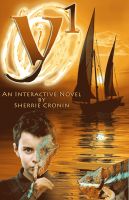
Review: y1 by Sherrie Cronin

y1y1 by Sherrie Cronin
My rating: 4 of 5 stars

What were the main relationships explored in this book? Family. There are a host of characters in this book. Enough that you will need to make little notes to keep track of who is connected to whom but not so much that you stop enjoying this fun read.

3 things I liked about the book … The author included links which made the book interactive. Although, the author had many different characters from different backgrounds, each character was strong and did not seem to disappear into the storyline without any resolution. The writing was excellent, it was cheery and straightforward.

Favourite character(s) … Obviously, Zane. He's a cross between Sheldon Cooper of Big Bang, Malcolm in the Middle and Luke Skywalker. Quirky, funny and powerful.

Disclosure: I received a review copy of this book from the author.

View all my reviews

y1 by Sherrie Cronin

Zane swore as a child to someday protect all of the odd people in the world. He studied chameleons and muscle groups as he taught himself to alter his own appearance, and it turned out that skills for blending were very helpful to a young boy too smart and too different to fit in well.

But as an adult, things have changed. Zane finds that he now just wants to be himself. He gets a degree in neuroscience to understand abilities that even he recognizes as astonishing. Worst of all, he is fast discovering that everyone is odd. He hadn’t counted on that.

When he lands in the sales department of Penthes Pharmaceuticals, he begins to uncover layers of corporate secrets that ultimately will hide surprisingly vile plans. Sent on a sales boondoggle to the South Pacific, he finds others with talents as surprising as his own and with problems far worse. As his new friends flee the malicious schemes of those who would control them, Zane wants to help. Their freedom-loving philosophy of y1 calls to him.

But first, he must deal with a murder charge. And an unsavory boot camp manager. And serious repercussions from the fact that not everyone at Penthes likes him, or wants him to knows the mysteries that the company has worked so hard to keep hidden.

Can he help them all? Can he even help himself? Fantasy, reality and a bit of speculative science come together as Zane uses all the unique abilities he has to resist turning from a murder suspect into a murder victim. Then he has to sort out just how to keep that childhood promise.

Buy Now @ Amazon & Smashwords

Genre – Speculative Fiction

Rating – PG13 (occasional crude language & main character is gay)

More details about the author

Connect with Sherrie Cronin via GoodReads

Website http://ytothepowerof1.org/

Download for free (at Smashwords) from now till 28th June

Coupon Code RV36Q

Orangeberry Blast Off – Night Chill by Jeff Gunhus

image

Jack Tremont moves his family to the quiet mountains of Western Maryland hoping to leave behind a troubled past and restart his life. Instead, he finds himself caught up in a nightmare when his daughter Sarah is targeted by Nate Huckley, a mysterious and horrifying stranger driven by a dark power that will stop at nothing to possess Sarah.

When Sarah goes missing, suspicion falls on Jack and he must uncover the secrets of the small mountain town of Prescott City and face the evil secret hidden there. As he digs further, he learns the conspiracy reaches more deeply than he could have imagined. Finally, he will have to face the question, What is a father willing to do to save his child? The answer? Anything. Anything at all.

Buy Now @ Amazon

Genre – Supernatural Thriller

Rating – PG13

More details about the author

Connect with Jeff Gunhus on Facebook & Twitter

Website http://www.jeffgunhus.com/

a Rafflecopter giveaway

Thursday, June 13, 2013

Orangeberry Book of the Day – Aberration by Lisa Regan

image

FBI analyst Kassidy Bishop is assigned to the “For You” killer’s task force after a series of sadistic murders bearing the same signature arise in different parts of the country.

The homicides are both calculated and savage, occurring in different states, but bearing the same signature: the words “for you” scribbled at each crime scene. The case chills Kassidy, bringing back memories of her own encounter with a violent criminal five years earlier.
Kassidy’s mentor, legendary agent Talia “The Confessor” Crossen knows the task force assignment is Kassidy’s chance to prove to her colleagues that she belongs in the Behavior Analysis Unit. For five years, other FBI agents and profilers scoffed at Kassidy’s appointment to the BAU, believing she was only offered the position in exchange for her silence about the brutal assault that almost killed her.

The stakes rise when the task force links the killer’s signature to Kassidy. As more and more bodies turn up, Kassidy must delve into her past and the mysterious death of her twin sister, which holds the key to uncovering the killer’s identity.

The closer Kassidy comes to finding the killer, the closer she comes to a deadly confrontation that could cost her everything—including her own life.

Buy Now @ Amazon

Genre – Crime Thriller

Rating – R

More details about the author

Connect with Lisa Regan on Facebook & Twitter

Website http://www.lisaregan.com/

The Garden by Paul T Harry

IN THE BEGINNING

CHAPTER 4

It’s got to be here somewhere, mused Adam as he studied the computer screen in front of him. Where was the breakdown occurring? Was it within the supplemental DNA coding? He raised his head and looked across the lab to see if his assistant, Jera, was having better luck. No . . . he was still busy at his own terminal.

Adam looked back at his console, his light blue eyes darting back and forth across the monitor screen. It should be here, he thought. Everything was working until now. He reread the DNA sequence that ran in block-like configurations across the entire screen. At the end of the array, he scrolled down to the next section, searching again through the chemical formulas that made up section 1044. It had to be here. Somewhere in this genetic mess was the minor disruption that had stopped their experiment cold. It was exasperating.

One by one, Adam reread each phrase, studying each link with no luck. He touched the screen and waited for the next supplement variation to appear, the light from the monitor reflecting upon his lightly hued violet skin.

“Why was the photosynthesis breaking down?” he pondered aloud. What was he missing?

With a frustrated shake of the head he looked over toward Nata, his lab assistant.

“Nata, I’m ready to look at the next section series. Would you correlate the molecular formula for Chromosome 17, sections 1045, 1046, and 1047, including the supplemental variations?”

“Certainly, Sir,” Nata replied, her voice cool and succinct. “Accessing the data now.”

Adam watched hypnotically as Nata’s twelve fingers fluttered over her keyboard like a musical instrument. She was fast—a virtuoso when it came to processing his needs and interfacing with the main computer. This was not unexpected. She was, after all, a Q-l hybrid Trifeme—the very latest in Gios bio-tech engineering—and specifically geared for their type of research. And not bad looking either—considering. Her pale green face was long and slender and off set with small, delicate features, while her lips were a soft yellow, and her hair dark and black. It reached passed her shoulders.

“Sir . . . ?” Nata queried softly. Her voice interrupted his musing. “The information you requested is on your screen.”

“Thank you,” he replied, shifting in his chair—it was back to work.

Once again Adam’s screen was filled with an endless chain of molecular formulas—DNA sequencing that stretched from top to bottom, illuminating a broken, one-celled protozoa that couldn’t process its own oxygen. He bent forward and began to review the new series when suddenly from across the lab he heard an excited yelp.

“I think I found the problem!” the voice cried.

Adam’s head shot up. From the other side of the lab, Jera was rising from the second series terminal and heading toward them. Almost running, he passed the main terminal sections linking the entire lab’s facilities. As he got closer, Adam could discern the grin etched upon Jera’s face.

“Thank Jhira,” he thought. “If he’s found the answer, maybe we’ll get out of here early tonight—fifteen hours is enough.”

Rounding the colax memory boosters, Jera bounded to a stop behind Adam and Nata. His lightly colored mauve face was flush with excitement and his long, black hair flew from his rapid approach. Adam smiled. Jera was always animated.

“What sections are you reviewing?” asked the younger scientist, breathlessly.

“Chrome’ 17, Section 1045,” answered Adam.

“Well you’re practically on top of it then. Move over to section 1046 and look at supplement “B-2110. That’s where we’re experiencing the disruption.”

Adam pushed several keys on the computer and highlighted the area that Jera had indicated.

“See, right there . . .” noted Jera, pointing to the screen. “. . . see where the breakdown of photosynthesis begins. I don’t think we’ve given the cell enough chlorophyll to keep it actively functioning in Krella’s environment.”

Adam traced the formula on the screen, analyzing Jera’s observation. “You may be right,” he finally responded. “The structure does tend to weaken within this phrasing. “Any suggestions on how to correct it?”

Jera rubbed his chin thoughtfully. “It seems to me that we haven’t compensated enough for energy output. I’d like to try increasing chlorophyll production by a factor of .00045. It should boost the energy levels sufficiently for cell reproduction without affecting heat dissipation.”

Adam studied the formula again analyzing the DNA supplement while considering Jera’s suggestion. “All right,” he said finally, sitting back in his chair. “Let’s give it a try. Nata, throw everything up on H.O.L.D.”

“Yes, Sir . . . coding now . . . Sir, its ready,” she replied a second later.

“Nata, please—call me Adam. You’ve been working here three months already. I think we can dispense with the formalities.”

Nata’s face flushed. “Yes Sir, I mean—Adam. Sir . . . H.O.L.D. is online.”

Adam turned and winked at Jera, who responded with a small chuckle. Poor Nata, she was an unbelievably good secretary and computer analyst, but her nature was almost seemingly inbred for unerring professionalism. Oh well, things could be worse.

Back to the business at hand, Adam rose from his console and walked with Jera to the Holographic Opticom Laser Display, or H.O.L.D. as it was referred to. The holographic screen loomed before them, its large, rectangular shape illuminating nearly thirty metrons of the lab’s west wall. Stopping in front of it, the two scientists gazed upon the project that they had been working on together for the last year and a half. There was a lot of sweat and hard work here.

H.O.L.D. was impressive. It was a computer interface, divided into three sections, each section measuring five metrons in height and ten metrons in width. Its primary function allowed DNA scientists, like Adam and Jera, to create and build new trial life forms, as sanctioned by the Genetic Research Academy. It was on this interface that DNA formulas could be projected and tested to see if they worked, before physical implantation. Contamination in a real world environment had to be avoided at all costs—no one wanted an errant microbe on the loose.

Adam studied the first section of H.O.L.D., the one closest to him and Jera. This was the primary code board for their DNA formula—it looked like a black chalk board filled with equations that were moving in sequence across the screen. It was here that the scientists could play with their formula, essentially “chalking in” their experimentation by hand with a laser pen. Once the data was entered, the Opticom would assimilate the input and the results would be projected over onto the next two screens. Already, this first section was crammed with data—a theoretical hypothesis for a new life form that the two scientists had been working on for months on end.

“Nata, enlarge and freeze Chromosome 17, section 1046, supplement “B-2110, on all screens,” instructed Adam.

“Immediately, Sir,” replied the secretary, her fingers flying.

Adam waited as Nata instructed the computer to correlate the three points of reference on H.O.L.D.. The first screen took less than a minute, the second and third a little longer. The two scientists watched as the colored DNA ladder on the second screen slowed, its three-dimensional graphics becoming deliberate.

The third screen was the last to fall to Nata’s instruction. And without a doubt it was the most impressive of the three screens. Displayed on its surface was the computer’s pictorial combination of the first two optic-screens. In this case, the image was a delicate singled-celled life form floating in a water-based life field. Eventually, it too slowed and stopped.

Adam nodded to Jera, “Go ahead and note the areas of change,” he instructed, “I’ll correlate from the main terminal.”

Jera crossed to the first screen and removed a zithron laser pen from his pocket. Making several quick parenthetical notations on the primary board, he noted for the computer where his changes were to be inserted, then waited as the formula separated, providing him with the blank space in which to write. As he made his notations, Adam correlated the information from his terminal, feeding the new data into the computer’s memory. After several minutes of writing, Jera finally stopped and checked his work.

“I think that’s it unless you have any suggestions.”

Adam looked up, “No, we’ll give it a try just as you’ve noted. Give me a second to initiate the parameter fields.”

Jera turned back to the screen and waited while Adam reactivated the computer’s main memory. Slowly, the first screen began to shift, coming back to life as the DNA equations on the primary board realigned themselves. Immediately after, the second screen followed suit and the DNA ladder reassembled itself, rebuilding on the new molecular patterns that Jera had written for its latticed framework. Finally, the third screen wavered and the single-celled protozoa pictured on its surface glided back into motion.

Both men watched the tiny entity pulsate and twirl, spinning in a circular fashion as the computer quickly rearranged its molecular makeup. Adam glanced down at the readout on the console. The changes Jera initiated seemed to be working. There was even an additional hint of chlorophyll in the cell’s translucent membrane wall.

“What’s the readout say?” asked Jera from the optic screen. “Any improvement?”

“Yes,” answered Adam, double checking the readout. “It says the photosynthesis has been raised to level +.00022. That should put the life form into an improved energy vector, considering Krella’s limited sunlight. Well, well, well, look at this. Not only is the photosynthesis up, but the oxygen output level has also been boosted—a factor of +.00013. Very nice. I think you’ve solved our problem. Perhaps with a little more work this little creature might survive on Krella after all.”

“Yes, but will it reproduce?”

Adam glanced up at his coworker and chuckled. “I’m sure we’ll find a way. And when we do we’ll submit a rough draft to the Genetic Examiners. If they find in our favor we might even get preliminary approval for a planetary implantation.”

“Wow,” replied Jera—he moved toward Adam. “What do you think our chances are? How does this life form compare to others you’ve worked on?” 

“That’s a difficult question to answer,” said Adam, suppressing a yawn. “After all, up till this point most of my experience has been on a theoretical level or as an under-sci working on simple, basic bacteria and viruses with other scientific teams. This is my first project beginning with conception and design, all the way to implantation. It’s been exhilarating to say the least, but we still have a lot to accomplish. And we’ve been lucky—our experiments have gone well. For this, I must give you a measure of the credit. Your assistance has been invaluable.”

“Thank you,” Jera replied.

“You’re welcome—and you too, Nata. Your skills here have benefitted us greatly.”

“Thank you, Sir.”

“I just hope that we succeed in rising to the expectations of the genetics council,” continued Adam. He rubbed his eyes. “Krikla! It’s been a long day. I’m tired. What do you say that we wrap it up for the day and get a bite to eat?”

The other two were voicing their agreement when a tone unexpectedly sounded from across the lab. “I wonder who that’s for?” asked Jera.

“Allow me,” said Nata, rising. She crossed the lab and stopped in front of a small opt-screen near the lab’s entrance. Pushing several buttons, she activated the communication device which lit up to display the face of a silver-metallic opt-tech.

Nata addressed the device. “This is GRL-4171-15 responding to a communication signal.”

“Acknowledged,” responded the opt-tech. “Please hold for incoming communication.” It then responded with a message: “Mirra Directory to GRL-4171-15, a request is placed for Adam Korton #14-311 of the Genetic Research Academy. Private communications sphere is forthcoming. Do you wish delivery? A privacy code will be required in order to forward this communication.”

“Adam, it’s for you,” Nata called back to the scientists. “It’s a commsphere.”

“Have them sent it,” responded Adam, “use the lab’s sub-code to authenticate.”

Nata shook her head and encoded the lab’s numbers. Within several seconds another tone sounded signaling the arrival of the sphere. She turned off the screen and opened the small opaque door that sat under the unit. Inside was a small, iridescent pink orb about the size of a marble. Nata picked it up, feeling its warmth upon her fingers. She walked back to Adam and Jera and handed it to Adam.

“I wonder what this is about.” he reflected, setting the glass orb onto the memory port of his computer. The commsphere rolled to the center of the port’s saucer-like dish and came to a rest.

Pressing a button at port’s base, Adam waited as its clear shielding rotated out and around, encasing the orb. A small light went on and the device began to hum. Immediately, the orb rose into the air slightly where it bobbed and danced, balancing itself on the currents of magnetic waves that bathed its surface. It then began to whirl faster and faster, twirling like a miniature planet floating in space. A tone sounded.

Adam glanced at the monitor. It was requesting a personal access code. He began to type. Seconds later a message was streaming across his computer screen.

“Is everything all right?” inquired Jera, noting Adam’s raised eyebrow and inquisitive expression.

“Yeah,” replied Adam, glanced up, “Take a listen . . .” He put the message on audio.

The computer began to speak.

“. . . Adam Korton, citizen #14-311 of the Genetic Life Academy of the Planet Mirra is hereby requested to appear before the Metra Examiners at the Center for Governmental Direction, tomorrow morning at ten. This meeting will finalize the commencement proceedings regarding the disposition of the Terran Council.”

Jera whistled softly. “I don’t believe it—they’ve chosen you?”

“This is incredible,” interjected Nata.

Adam shook his head, looking at both of them. “Now don’t get your hopes up. This may not be what we think it is.”

“Ah come on, Adam!” exclaimed Jera. “Who are you kidding? We know the decision was due sometime soon.”

“True . . . but that doesn’t mean that Eve and I were actually chosen.”

“Speaking of Eve,” queried Jera. “Do you think they’ve contacted her?”

Adam shrugged. “She told me this morning that she was going to be wrapped up most of the day lecturing to a group of medical students on the Oconia system. It seems there’s been an outbreak of disease on several of the planets in the system, so they’re preparing a group of med-techs to inoculate the inhabitants.”

“Well, why don’t you give her a call?” suggested Nata. “Maybe she’s returned.”

Suddenly, as if on cue, the door at the end of the lab abruptly swung open revealing a tall, violet colored woman with shoulder length, light brown hair. She stood there for a second looking about the lab, finally catching sight of Adam’s waving arm.

“We’re over here,” he called out.

Eve moved across the lab, her white smock rustling crisply against her long, slim legs.

“Adam,” she called out breathlessly. “I just received a communiqué from the Metra.” She held up a small spherical orb for him to see. “Hi, Jera . . . Nata . . .”

“Yes, I got one too.” he responded.

“Do you think they selected us?” she asked.

“I don’t know,” he answered, rising to his full height of seven metrons. “It’s possible.”

“Oh I do hope so,” she replied, hugging him tightly. “We’ve waited so long.”

Adam smiled and looked into his wife’s turquoise colored eyes. He could feel the excitement of the Metra’s news coursing through her body. He squeezed her and gave her a quick kiss on the cheek, the thought of being selected by the Metra running through his mind. Perhaps ... he thought ... perhaps. It was the feel of Jera’s hand on his shoulder that brought him back to the moment.

“I can’t think of a more qualified couple than you two,” Jera commented. “Jhira’s blessings are with you. And I am definitely honored to have shared in your friendship and your research.”

“We’re being premature,” coughed Adam, slightly embarrassed. “Besides, even if we have been chosen there’s still a great deal of work ahead of us, and plenty of time before we’re ready to leave Mirra. At any rate, we don’t know for sure that we’ve been chosen.”

“Well even so, this calls for a toast,” said Nata. “Let me get the vin from the freonic and some glasses.”

image

Buy Now @ Amazon

Genre – Sci-Fi / Historical / Contemporary

Rating – NC17 for explicit sex

More details about the author & the book

Connect with Paul T Harry on Twitter

Website http://5moons.com/

Wednesday, June 12, 2013

Stacey J. Mitchell – Beware the Procrastination Demons

Beware the Procrastination Demons

by Stacey J. Mitchell

Procrastination. It’s an evil word for any writer. According to Merriam-Webster, procrastination is ‘to put off intentionally the doing of something that should be done.’ It can happen for all sorts of reasons, but a lot of people link it with writer’s block. When the block happens, procrastination levels skyrocket.

Writer’s block is a tricky thing for me, as I don’t allow myself to believe in it. I think all writers have good and bad days, but it seems to me that as soon as you attribute a bad writing day to writer’s block, you’re paving the way for it to keep happening. It’s not making an excuse, exactly, but the way I see it, if I don’t acknowledge it, it can’t plague me! But that’s not to say I don’t indulge in healthy bouts of procrastination, because of course I do.

Procrastination is a dangerous thing as it can seriously affect productivity. Think about those days when you sit down at the computer and think, “Okay, time to start writing. But I might just check my emails first and then log on to Twitter quickly.” And then you see in your inbox that your blog has received some comments, so you think you had better just reply to them too—it’ll only take five minutes, and you might forget to do it later. And then, after you’ve spent half an hour on Twitter, you realise that you’ve wasted an entire hour (and I’m being conservative with my timings here).

So why do we do it? Considering we love what we do so much (allowing for the days when every word has to be dragged, kicking and screaming, from our minds), how come we allow ourselves to fritter away that precious time? I can’t speak for everyone, of course, but for me procrastination happens for two reasons. Firstly, I genuinely think that what I want to do will take less time that it actually will (and considering I always serve dinner fifteen minutes after I say it’ll be ready, I think this is true across many areas of my life!). I also don’t allow for the fact that I get led from one thing to another very easily. I’m like Dug, the talking dog in Up. He’s talking about something when suddenly, mid-sentence—squirrel!—and then he continues. I’m like that, but with tabs in my internet browser instead of squirrels.

The second reason I procrastinate has to do with tasks that I’m putting off, because I either don’t want to do them (ebook formatting) or because I’m unsure if what I’m doing makes sense (a plot twist or a scene that has turned out differently than I expected). The former is me wasting time instead of just getting on with a tedious task, and the latter has more to do with my insecurity as a writer than anything else. There’s another school of thought that says that any task will expand to fill the time available, so if you only have half an hour to write a blog post one day that’s fine. It’s the day when you have two hours to do the same thing that you’re in trouble, and the procrastination demons can come out to play.

I think to a certain extent we need to embrace procrastination, and accept that we will never be rid of it completely. I can turn the internet off and still find something else to do, other than what I’m supposed to. If there’s a window nearby, whatever is happening on the other side of that will do. If I’m in a public place like the library, people-watching is even better. The only way to stop myself procrastinating would be to shut myself in a small, plain room, with no windows, no internet connection, nothing. And as I’m certainly not about to do that, I just have to accept that I will always procrastinate to some extent. If you fight it, it fights back. Just look at it as a bit of creative downtime for your brain.

image

Buy Now @ Amazon & Amazon UK & Smashwords

Genre – Contemporary Fantasy

Rating – PG13

More details about the book

Check out her author interview & guest post 1

Connect with Stacey J. Mitchell on Twitter

Website http://staceyjmitchell.com/

Sign up to her mailing list

Tuesday, June 11, 2013

Author Interview – Madeleine McLaughlin

Do you have to travel much concerning your book(s)? No. No travel yet. But I’ve done some research on certain crimes of the past and wouldn’t mind visiting the places where these crimes took place. One in Ontario and one in BC.

What books have most influenced your life? History books because I learned a lot about the world and good and bad people and what ordinary people can be driven to. When I’ve read about cast-aways, there were one or two who tried to set up a power base over the others and then there were people who went out of their way to help. Why does one choose one way and another choose the other way? That’s what I try to figure out as I write.

Have you ever considered anyone as a mentor? No.

Who is your favorite author and why? The late Harry Thompson because he’s also a history writer along with a historical fiction writer. Plus he has beautiful prose.

Can we expect any more books from you in the future? I hope so.

Have you started another book yet? Yes.

Where do you see yourself in five years? Hopefully with more books but same place as now, same life.

What are your current writing projects now? I’m writing several stories, mostly dark but I’m also working on two novellas. I hope to enter one into a contest or publish them together in a book.

Are you reading any interesting books at the moment? Everything I read is interesting. I’m interested in people and that’s what books are about.

Are there any new authors that have sparked your interest and why? Heather Haven. Such good characters. I can’t wait for Hollywood to make movies of her books.

When Kevin learns of his mountain town’s evil past, he must struggle to understand his father’s part in it and how it affects himself.

Buy Now @ Amazon & Smashwords

Genre – Horror

Rating – PG

More details about the author

Connect with Madeleine McLaughlin on Facebook & Twitter

Review: The Mountain City Bronzes by Madeleine McLaughlin

The Mountain City BronzesThe Mountain City Bronzes by Madeleine McLaughlin
My rating: 5 of 5 stars

Formatting / Appearance. Appearance, format and layout were fine, no issues.

Which characters do you particularly admire or dislike? Really liked Lorne telling Kevin to listen to his father and not turn out like him and his brother.

Who in this book would you most like to meet? The sculptor. Just to kill him one more time.

Disclosure: I received a review copy of this book from the author.

View all my reviews

Monday, June 10, 2013

Orangeberry Book of the Day - The Passion of the Christoph by Christoph Paul

Visiting Speaker’s Corner

I can remember the carnival of sounds.

Speakers’ Corner in London, where anyone can talk about anything—except for the topic of the Queen, for talking about her, that would be undignified.

On that particular Sunday, I heard the first speaker say, “God is dead, we are all just gorillas, where the European apes have surpassed the African ones.”

I asked him how he came up with such a stupid theory. He remained polite, gave me a thoughtful nod, and said, “Nietzsche and science books.”

As a fan of both I felt saddened, but told him, “Well, you are the first racist I’ve met who likes to read. I’m from Florida.”

He then told me he could see the strength of my Italian blood and that Mussolini was “truly a great man.” I said, “Um, thanks, but that doesn’t make you any less wrong or less racist.”

He responded in a dignified tone, “Well, we will just have to agree to disagree like gentleman.” He then wished me a good day and gave me a strange bow showing me that British White Supremacists are just as stupid as the American ones—only way more polite.

I left the well-read racist and walked over to a tall blond man preaching to a large crowd. He was holding a Bible and wearing Wrangler’s and a cowboy hat, with a big cross around his neck.

He called himself the Christian Cowboy and had an American accent that sounded Texan. He said he was done preaching but wasn’t finished with the Lord’s Work and he encouraged us all to follow him into battle. We did, until we arrived in front of a group of Islamic Fundamentalists.

Three of them preached for the need for Sharia Law in England. As they quoted a verse from the Qur’an, the cowboy started to laugh and heckle them, calling them Satan’s fools and terrorists. The young Muslim leader with a prepubescent beard said the Christian was the fool and should feel shame.

The cowboy responded that the boy should be ashamed because he couldn’t grow a good enough beard for Allah.

I left the holy war and walked toward a short bald man waving his hands and screaming about how sexism was good and he was a proud misogynist. He shared the wisdom that all men are stupid these days because of too many female teachers. He said the worst thing was that American lesbians had reached England because The L-Word was in syndication.

He ranted for another twenty minutes until he finally admitted it had been a really long time since he’d gotten laid.

As his soapbox turned from misogynist to trying to get sympathy sex, I left him for a more moderate-sized crowd where a clean-cut looking man in his thirties praised the practice of being a vegetarian. He gave simple-to-follow solutions to ending world hunger, losing weight, and to stopping the harming of animals.

His speech was the most sensible one I had heard so far, but his voice was very monotone and he lacked stage presence. While the small crowd nodded and a few yawned, I noticed many of them kept looking to the right, where a British black man was wearing what looked like a Burger King crown, wearing the United Kingdom flag on his back like a Superman cape.

As the vegetarian man continued to talk about the dangers of cow flatulence, the small group moved away until we reached the self-proclaimed Caped Conservative.

He welcomed us but said we were most likely ignorant peasants who didn’t realize that the only way to restore England’s greatness was to make George W. Bush prime minster of England.

He spoke with great passion on why “Dubya” was one of the greatest leaders in the history of western civilization and how England should make him a dual citizen or even king.

Most laughed at him, but an older American woman gave me a concerned look, then grabbed my arm and said, “I’m really concerned for him . . . I think he’s the craziest of them all.”

Buy Now @ Amazon

Genre – Humor / NonFiction

Rating – NC17

More details about the book

Connect with Christoph Paul on Facebook & Twitter

Website http://christophpaulauthor.com/

Sunday, June 9, 2013

Orangeberry Book of the Day - A Widow Redefined by Kim Cano

Chapter 1

Standing in the snow in front of my husband’s grave, I came to an unexpected realization. What used to be a romantic tribute had become something disconcerting.

As I kneeled down to lay a pink rose at the base of Justin’s headstone, I noticed a bouquet of yellow daffodils in the spot where I planned to place my flower. Daffodils? From whom? I tried to wrap my mind around why they were there, to solve a mystery I hadn’t anticipated.

Then a strong gust of Chicago wind slapped across my face. And with it came a new level of comprehension. Today was Valentine’s Day. These flowers were fresh.

Confused, I began to look around. I scanned the cemetery for others and saw a lone groundskeeper cleaning near the entrance. I dropped my rose and began running in his direction.

Arriving short of breath, I asked, “Have you been here long? Have you seen anyone else here recently?”

“No,” he said, eyeing me with caution. “I just come from break.”

Out of frustration I grasped for anything. “Okay, well is there a log of some kind? Of the people who come and go each day?”

My visitations had never been recorded. I knew this.

The man could see its importance to me, so he gave it some thought before responding.

“No,” he said. “No records.”

Disappointed, I stood there, staring at him. He gazed back at me, with a polite smile on his face. Then, after an awkwardly long pause, the groundskeeper’s look changed from pleasant to irritated. He mumbled something about being busy and walked away.

My mind began racing and I felt the pulse of a headache starting in the back of my skull. When I left work earlier, I’d been happy to find it wasn’t cold and gray. Driving into the cemetery, I had been captured by the particularly brilliant sunset; the sky blazed with pink and purple streaks.

Now, as I stood alone, the sky was dark.

Suddenly, I couldn’t leave fast enough. I began running toward my car, somehow managing to not trip or fall, then hopped in and slammed the door shut. A little flustered, I dropped my keys as I went to start the engine. I felt around and finally discovered them jammed between the front seat and center console. I pulled them free, started the car, then peeled out of the parking spot like a teenage drag racer.

As I turned left onto the main road to head home, I considered the possibilities. Maybe Justin’s parents were in town and had gone to the cemetery. They popped in from time to time, not always stopping by to say hello. The rare trip to see their grandson was the only reason they ever seemed to bother with me.

I knew it wasn’t my mom. After the funeral she never went back, although she was respectful of my visits, which were many over the last two years. Since the funeral, my routine—coming on holidays and his birthday—had always been the same. Only the seasons changed. But today my world tipped slightly off its axis, and I couldn’t help but recall what my older co-worker Barb had once told me, that the only constant in life is change.

Something in the pit of my stomach didn’t like it.

As I got closer to home, I tried to forget the flowers. I wanted to seem normal to my son, Tyler, and my mom. He’s only seven, and believed I was out visiting a friend. Mom, on the other hand, is quite perceptive. Nothing gets past her. Stressed out and feeling a migraine coming on, I turned right onto the street where I live.

“Hey honey, I’ve got your plate in the microwave,” Mom called out, after she heard me come in.

I set my keys and purse on the sofa, took off my coat and hung it up. Then I walked into the kitchen.

“Amy,” Mom said, “You look terrible. Are you okay? You have sweat beads on your forehead.”

I wiped my face with the back of my hand. “Oh,” I replied, “I’m fine, just a little cold.”

She gave me a funny look and put my food on the table. I sat down to eat right away, hoping she wouldn’t ask more questions. Then Tyler ran in.

“Mom. Grandma and I went to the library. I got a DVD on bugs of the desert southwest. You wanna watch it with me?”

“Sure honey.” I somehow managed to eat dinner and hold a coherent conversation, but the whole time I felt like I was sinking in quicksand. Luckily, no one seemed to notice. Afterward, Mom returned to her novel, and Tyler and I watched the bug program; at least it appeared like I did. Mostly I just stared at the TV while thinking about the daffodils.

“Scorpions are so cool. Don’t you think?” Tyler asked, interrupting my thoughts.

I despised bugs, but I didn’t want to disappoint my son. “Yeah, I guess they’re pretty neat,” I agreed. “You know, it’s almost time for bed soon. I’m going to take a bath, and then I’ll come and tuck you in.”

Tyler frowned but didn’t put up a fight. He was well-behaved that way. He put the disc back in its case while I left to go to the bathroom. Once inside, I dimmed the lights and locked the door. I turned the tub faucet on to as hot as I could stand it, added some aromatherapy salts, undressed and climbed in. As the water level grew, I sunk deeper into its protective womb. I closed my eyes and let the warmth slowly relax me. As so often happened when I relaxed, an old memory surfaced—one I try not to remember—of the day my dad moved away, leaving my mom and me for another woman. I was just a kid.

Tears began flowing down my cheeks and into the water. It was a silent sobbing so as not to disturb anyone else. Then my mind began to race again. Daffodils! Soon my head throbbed with unbearable pain. I couldn’t allow myself to think about any of it a moment longer, so I released the drain, grabbed a towel and climbed out.

I must have lost track of time, because when I went to tuck Tyler in, he was already in bed, asleep. I leaned over and kissed him on top of his head, then gently closed his door. When I got to my room, I noticed a bottle of Excedrin lying on the dresser, so I took two, without water, and collapsed into bed.

While lying in the dark, I decided to think of something happy. A good memory. A previous Valentine’s Day. Justin always took me to Francesca’s, our favorite Italian restaurant. I could almost see us sitting at a candlelit table, drinking wine and eating pasta.

Justin raised his glass, “Someday I’m going to take my kitten to Paris.”

I flushed. Even after years together, he still had that effect on me.

“We’ll eat at the Eiffel Tower restaurant for your birthday. Then we’ll go on one of those Seine river cruises. What do you think?”

“Say the word and I’m packed,” I said.

We spent the night talking, sharing tiramisu. Justin glowed with health and his blue eyes sparkled as he described plans to expand his carpentry business. Soon we’d be financially set. We’d be able to afford to travel the world together, like we always talked about. I don’t think I’d ever seen him more excited about anything as he was about this.

People shouldn’t die of cancer at thirty.

Every good memory eventually ended up there… in reality. There was no escaping it, no matter how hard I tried. And now there was the mystery of the daffodils. I didn’t know what to think, but I desperately needed rest if I wanted to make it to work in the morning, so I shut my eyes and willed my mind to stop racing.

I dreamt of Justin. We floated peacefully together on a lake in a rowboat. The sky was clear and the sun shone bright. He said something funny that made me laugh, causing me to lean over and clutch my belly. When I regained composure and tossed my head back up, still smiling, clouds had filled the sky. They had an ominous look about them, angry. Lightning sparked followed by loud claps of thunder. I looked at Justin, wondering what we should do, but his expression was blank. Then the waves grew choppy. All at once, swells the size of skyscrapers surrounded us. One moment we were in their trough, the next we ascended their foamy crest. Terrified, I looked over at Justin, seeking some kind of help. He remained blank-faced and unresponsive. Then, as we began descending back into the dark cavern of the wave, the boat tipped over, and I woke up, choking.

image

Buy Now @ Amazon

Genre – Women’s Fiction

Rating – PG

More details about the author & the book

Connect with Kim Cano on Facebook & Twitter

Website http://www.kimcano.com/

James R Johnson – How to Make Your Characters Believable

How to Make Your Characters Believable

by James R Johnson

When I was a baby, the movie Jaws was in theaters.  My parents couldn’t find a babysitter so along I went.  The film is suspenseful and gripping.  But it seems that the audience of that particular showing got more than they bargained for.  As a baby, I stood on my mother’s lap, clapped and cheered ever time the shark ate someone.  I was a twisted child.  I identified with the shark.

This is a classic film with many classic scenes and lines.  One such line involves Roy Scheider’s character Chief Brody saying, “You’re going to need a bigger boat.”  This was right after we see the shark for the first time.  And more importantly, Chief Brody sees the shark.  What makes this line so classic?

Characters that are believable leave an indelible mark on an audience.  They are accepted and embraced by moviegoer and readers alike.  The litmus test of a believable character is reaction.  What does a character do in response to stimuli?  A character who stares down a twenty-five foot Great White shark and shrugs it off without fear is not believable.

But there is more to this than authentic reactions.  There are qualities in people, many qualities, many traits.  A well rounded character is a collage of traits that makes them unique.  Look at the villain who cares about beauty of life or the hero who has some struggle personally.  We, like the characters we search for, have a myriad of traits.  Some are good and some are bad.  And that is the key to a believable character.  Someone who displays many qualities, is grounded in those qualities, will react with a believable response.

To get the process rolling, let’s take a look at a few questions designed to get the character makeup kick-started.  First question: What does the character want?  This could be something as simple as peace and quiet or as complex as obtaining a specific item.  The idea here is to find what drives that character, not find out what they want for lunch.  This goal, this passion is the basest desire they have.  This encompasses their lives.  This will help you see what the character is moving toward.

Next question: Why will this goal satisfy the character?  Does the character want peace and quiet?  Why?  Is it because they have lived a life of war, military service?  Dig deeper, what is it about peace and quiet?  Is it because they feel like they have given enough, it is time to retire?  A realistic reason to obtain the life goal will help you see why a character is driven.

How does the character go about reaching the goal?  In the case of peace and quiet, does the character withdraw from everyone around him?  Does the character fight through obstacles?  The process by which a character moves toward their goal is as unique as the person themselves.  Each step leads the character closer or further away from that goal.  This will help you see how the character understands the world around them.

Finally, how does the character measure success?  Is this character satisfied that they are moving toward peace and quiet or are they only truly happy when they have attained it?  The perception of what constitutes success defines the character’s commitment.  This will help you see the determination of the character.

Take all these answers and formulate a character that has a past, who wants a life goal, whether they know how to get it or not, and reacts to life like you do.  This is the beginning of creating a believable character.  Finesse and polish your character by talking to them.  I know it sounds cliché, but it works.  A believable character will know how they will respond if you ask them.  Just like Chief Brody, they will reveal a real person.

Buy Now @ Amazon

Genre – Urban Fantasy

Rating – PG13

Connect with James R Johnson on Facebook & Twitter & GoodReads