Saturday, August 17, 2013

Adverbs & Clichés in a Nutshell by Jessica Bell

INTRODUCTION

Writers constantly have rules thrown at them left, right, and center. Show, don’t tell! Stop using so many dialogue tags! More sensory detail! More tension! Speed up the pace! Yada yada yada ... it can become overwhelming, yes? I used to feel overwhelmed by it all too. In fact, I still do sometimes. It’s hard enough to get the words on the page, let alone consider how to put them there.

My own struggles have led me to write this series of pocket-sized writing guides. So you can learn to hone your craft in bite-sized, manageable pieces. But please keep in mind, their purpose is to inspire you to become better at your craft. To teach you how to grow as a writer. They will not tell you how to write. They will not preach writing rules and styles to you. But they will help you realize that you can, little by little, end up with a work of fiction as unique as your own soul (whether you regard your soul as a spiritual entity, or nobility of temperament, in this context it is one and the same).

I like to think of a writer’s “voice” as the soul of their imagination. If you stay true to your soul, you will produce unique fiction. There is no doubt about it. Because everyone has his or her own soul. No other soul in this world will ever possess the exact same qualities as yours. So when you are seeking writing advice, always take into account that the advice is coming from writers with their own unique souls, too. Be inspired by them. Feel motivated. But do not feel the need to be like them. Trying to write like somebody else is (bar writing exercises), in my opinion, the biggest disservice you can do for your work.

In the first book of the Writing in a Nutshell Series, I focused on demonstrating how to transition “telling” into “showing.” In this book, I deal with another of the most common criticisms aspiring writers face: to absolutely avoid adverbs and clichés like the plague. But see, right now, I just used one of each. And at the beginning of the Introduction, I used a few too. Because they come naturally, and we frequently utilize them in everyday speech. But in fiction, too many adverbs and clichés weaken your prose. It’s considered “lazy writing,” because it means we don’t have to show what’s happening.

If your manuscript has too many adverbs and clichés, it most likely means that the emotion you felt while writing it is not going to translate to the reader in the same way. Never underestimate the weakness of adverbs and clichés. You’d be surprised how vivid your writing will become once they are subverted.

Sure, clichés exist because they stem from things many of us experience in real life, and you may argue that they are “relatable,” so why not use them? But the way in which one experiences things isn’t always the same. As writers, it’s your duty to make readers experience your story from a unique point of view. Your point of view.

Before we go into details about how adverbs and clichés weaken prose, and how you can subvert them, first you need to understand that they aren’t always going to be a problem. In fact, you don’t need to go overboard trying to eliminate every single adverb and cliché in your manuscript. Because sometimes, they just work. They serve a purpose. Especially in dialogue. Of course, it also depends a lot on your character’s voice.

For example, sometimes it’s more concise to write, “She lightly knocked on the door.” Not every single action needs to be poetic and unique. Sometimes you need to write exactly what someone is doing because it’s not important enough to draw attention to. Also, if we just wrote, “She knocked on the door,” we’d have no idea whether it was loud or not. And if this action wasn’t all that significant, it would be a bit too wordy to say something like, “She knocked on the door as if her hand were as light as a feather.” (Look, cliché again, they creep in so easily, don’t they?)

But consider this: What if this person’s light knocking on the door was paramount to the story? What if it was a moment of suspense? What if behind that door was a man this person was afraid of? What if this person was anticipating being verbally abused for the interruption? Then this ‘lightly knocking on the door’ would have a significant purpose, yes?

The action of lightly knocking on that door is no longer a simple transitional action that moves the character from A to B. It is in your manuscript for a reason. You put it there for your readers to feel the same apprehension your character feels. And no adverb or cliché, as you can see, is going to draw attention to that moment of intensity like something crafted for it exclusively.

So let’s try our hand at making this moment pop. How about, “She tapped on the door. It echoed in her ears like an axe to a carcass.”

So how does this better convey its intended sentiment? I’d say the fact that this person perceives their tap on the door as a deep, echoing, and unpleasant sound means that they are anxious about the reaction it is going to elicit. Also note that I’ve chosen the verb (tap) which means “a light knock,” so there is no reason for me to use the adverb “lightly.”

So how exactly can we approach the subversion of adverbs and clichés? For starters, play around with similes and metaphors when you’re trying to convey emotion, and for action, use strong verbs to show it happening in real time. For example, instead of using something clichéd like “the streets were so quiet you could hear a pin drop,” find a small detail to zoom in on that shows how quiet the streets are. Put a lonely-looking man kicking rubbish down an abandoned street, perhaps. Have him drag his feet. Perhaps the sound can be heard from two blocks away where your narrator is waiting for a bus that never arrives.

Most of the time, if you think of the small details, rather than the bigger picture, you’ll avoid adverbs and clichés naturally. And remember to be experimental. You never know what you might come up with.

By analyzing the thirty-four subversions of adverbs and clichés in this book, I hope you will be inspired to transform the mundane and overused expressions in your work into gourmet imagery. I suggest you read each set of examples four times. The first time, in its entirety, to grasp the general feel of the examples. Notice how flat the examples using the adverbs and clichés sound compared to the unique examples. The second time around, try to identify which elements in the unique examples match the basic sentiments of the adverbs and clichés presented in the other examples. The third time, identify how the unique example conveys, and/or adds to, those sentiments. And the fourth, brainstorm your own way of subverting the examples that use the adverbs and clichés. Remember, do not try to write like me. Just be yourself. Close the book. Close your eyes. Immerse yourself in the situation.

I have left plenty of space throughout the book for you to try your hand at your own unique examples. I’ve also provided a few short writing prompts at the very end. Please don’t feel ashamed to write in this book. It’s what it’s made for.

Happy subverting!

~EXAMPLE 1~

Adverbs:

loudly

relentlessly

slowly

Clichés:

scream like a hyena

snail’s pace

splitting headache

traffic jam

Using adverbs:

I slowly move through the chaotic traffic, my daughter screaming loudly in the back seat. My head is throbbing relentlessly. It feels like it’s going to crack open.

Using clichés:

My daughter and I are stuck in a traffic jam, and it’s giving me a splitting headache. The cars are moving at a snail’s pace, and my daughter is screaming like a hyena.

Unique example:

The sharp shrill of car horns and my daughter’s wails pierce through my head like ice picks, doing nothing to help lessen my grip on the steering wheel, while we inch along in grueling traffic.

Go to Contents.

Go to Index of Adverbs.

Go to Index of Clichés.

~EXAMPLE 2~

Adverb:

habitually

Cliché:

old habits die hard

Using adverb:

Buy Now @ Amazon

Genre – NonFiction

Rating – G

More details about the author & the book
Connect with Jessica Bell on FacebookTwitter

Website http://www.jessicabellauthor.com/

Friday, August 16, 2013

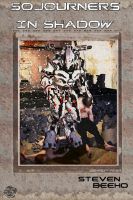
Sojourners in Shadow by Steven Beeho

Our Saviour

The rocky terrain slowly disappeared and soft earth took its place. Not much, but enough to support life. The damage from the past had not reached here, perhaps due to the arc of mountains that formed about it. Whatever it was, the wilderness was behind and prospects were ahead: supplies, communities, information.

Straker stopped and looked about him, wary of threats, also looking for life. He wasn’t sure what type of being he would come across, but he was confident in himself; there wasn’t anything he couldn’t evade, outsmart or overcome. Even so, he took his automatic rifle from his shoulder and checked it over. Hardly his weapon of choice, old and troublesome, but he had carried out enough repairs on it to know it would do its job. He checked his ammunition in his backpack as well; three more magazines, plus only two grenades - he would have to try to get more if possible. He had a long knife strapped to a thigh and a small one tucked in a boot, plus he could kill with his hands, yet some problems needed an explosion to solve.

He continued his purposeful stride. Tall, muscular, but not bulky; he was a sculpted figure on the landscape. His hands were rough and his face was grim. His green eyes flicked about as he walked. He hoped he met humans or mutants here; he could pass for either, although in time the former would probably detect his superior abilities. Even so, as long as he was brief and careful, he could get what he needed and be gone before suspicion arose. As for mutants, they would revere him or possibly hate him on sight; some were jealous of perfection.

Sounds came to his sharp ears and he dropped, smoothly and suddenly, lying on the grass with his rifle ready. Then beings appeared, not too far away, climbing out of the ground, looking up and around before hurrying in one direction. Straker stayed still, watching, as over twenty figures stopped at a patch of upturned earth and rooted through it. Straker had already noticed a number of such patches about the area. There were also trees and bushes. Some individuals broke off to a nearby cluster where sacks were being filled. It was clear what was happening, but the sense of urgency was mysterious.

Then there was panic as the group heard a whirling noise. Straker had already heard it and seen the dots in the sky when they could not, but they seemed to know what these were and ran for their safety. The fleers were of all shapes and sizes, several moved awkwardly; Straker knew they were mutants and so rose.

“Quick, get in,” he urged, running for the hole in the ground himself, using the situation to gain entrance. They reeled in surprise but never stopped running. He aimed his weapon skyward. “I’ll cover you, hurry up.” The flying objects were closing in. Straker had never seen the like, but the mutants had and fled underground, the last closing the hatch, disguising the way.

“Who are you?” someone asked Straker, who had slipped in with the last few, not giving them a chance to shut him out. “Are you a human?”

“No, he’s a super-soldier,” another, a middle-aged woman, replied for him.

“How do you know that?” asked Straker calmly.

“You look too good to be human.”

Buy Now @ Amazon & Smashwords

Genre – Post- Apocalypse Sci-Fi

Rating – PG13

More details about the author & the book

Connect with Steven Beeho on Facebook & Twitter

Steps Into Darkness (A Shakertown Adventure) by Ben Woodard

Steps into Darkness

Explosions, sabotage, caves, deadly warnings and a dangerous red-haired man.

Imagine The Hardy Boys meet Tom Sawyer. Add a layer of teen angst and excitement plus a mysterious group trying to stop a new dam while stirring up racial tensions.

That’s STEPS INTO DARKNESS, the next book in the Shakertown Adventure Series by Ben Woodard.

Fourteen-year-old Tom Wallace again makes plans to escape the small town in the 1923 Kentucky countryside. The town that won’t let him forget his past, when a horrific event changes his mind. He teams with his cousin Will and young FBI agent Rick Sweeney to try to solve a perplexing mystery. Attempts on the boys’ lives and a bewildering list of suspects keep them on edge and confused. An old man gives them a clue that leads to a false accusation and embarrassment until they discover the real villain, and then wish they hadn’t.

STEPS INTO DARKNESS is a fun, page-turning thriller with a hint of romance that explores the fears of a teen who is living with a frightful memory and the racial mores of the day.

Buy Now @ Amazon

Genre – Young Adult Mystery

Rating – PG13

More details about the author

Connect with Ben Woodard on Facebook & Twitter

Website http://www.BooksByBen.com

Thursday, August 15, 2013

Dark Corners by Theresa Ann Curnow

Dark Corners

I see them everywhere, in the shadows and from the corner of my eye and in the dark corners of the house. I try to be deathly quiet and not stare at them because I don’t want to see their faces any more than I have to. I’m scared that if I look too long at them, they will show me even worse images that will render me insane. They have terrible stretched, elongated grins and dead soulless eyes and an aura of complete emptiness about them that gouges my heart with desolation and makes me want to retch.

Sometimes they crouch in the shadows of doorways; sometimes I see them in passing cars, the shape of them black and fleeting, pressing against the glass, their mouths open in a frozen scream. They exist everywhere, in places that you don’t want to look and places that you can’t help but look. I often see them in the windows of shops, of houses, and I turn away quickly, my mouth tasting of ash and my heart bouncing around my chest like a prisoner trying to escape.

They exist mostly in dark corners though. They seem to like the darkness. They embrace it, and more than once I have seen the whites of those terrible dead eyes. I have the feeling that if I reach into that darkness I will become a part of it. It will creep up my flesh like goose bumps, like black viscous oil; devouring me until I am one of them, until I too crouch in dark corners and watch people like a voracious animal. They have a strange smell that only I seem to notice as I walk past them; like the ozone and wet coats and damp hair; like mothballs and old age and rotting weeds. It makes me gag all the time and when I do this in the street, people stare at me, their lips curling in barely disguised disgust.

I used to have a job, a girlfriend, friends, family and a decent life, but that is all gone now. People tend to evade you when you start to act strange, when you stare into corners and places at things others can’t see. At first they humour you. My best friend told me jokingly I needed to go to Spec Savers after I asked him if he could see the shadow in the corner of my living room. But then they become slightly irritated and perturbed. They have no idea what it is you’re talking about. They become slightly fearful because it’s not something that they understand or even want to think about, this apparent shift and descent into insanity, and so eventually they just stop taking your calls or coming to visit. They bury their guilt at abandoning you and carry on with their lives, and you’re left to unravel, to try not to stare at the corners of the rooms.

I used to be a writer. Sometimes, I was good and on occasion I was great but a lot of the time, I had to drag the words out painfully and then stick them onto the page, hoping that they made enough sense to earn me a pay-cheque each month. I used to write for a paranormal magazine in which I had a column called ‘Ghost of the Week’ and I wrote a short story each month too. But all that has changed now. Since all this started I haven’t been able to work, to write a single thing. Every time I try, I feel them watching me and my fingers stutter to a fearful halt like paralysed crabs.

In the very beginning I used to think that they only existed in my home but I soon realised that wasn’t true. They are literally everywhere and I can’t quite understand how more people don’t see them. I see people going about their daily lives - laughing, talking, walking, shopping and driving. They have cell phones clamped to their ears and children in their arms and shopping bags in their hands and dogs on leashes. They appear so normal. I long to go back to that, when all I had to worry about was how to pay the bills and whether I would ever make a name as a writer. People think I’m crazy now. They stare at me in the same way that I used to stare at those sorts of people who talk to themselves in the street. I know that I’m not crazy although I sometimes wish I was. I wish that I could wallow in the comforting cradle of insanity.

I’m not sure what t

Buy Now @ Amazon & Smashwords

Genre – Supernatural

Rating – PG13

More details about the author & the book

Connect with Theresa Ann Curnow on Facebook & Twitter

Website http://teri-ann.weebly.com/index.html

hey are. At first, I thought they were ghosts but that idea was soon extinguished. They are like no ghosts I’ve ever heard of. Although I’ve never actually seen a ghost, I am fairly certain that they don’t hang around in the shadows and fixate their gaze on me like the eyes from a painting of Dante’s Inferno and I’m fairly sure that when they grin, they don’t have mouths like dark wide cracks filled with teeth that look like black needles.

It all started just after my latest bout of writer’s block. I had been trying desperately for weeks to come up with a decent story for the magazine with little results, and then a friend suggested hypnosis. I had a few sessions and the block began to lift and my creativity began to bubble and flow like a fast moving brook. Ideas and plots and characters began to rush into my brain all at once so that my head was crammed full. I wrote for hours on end, the many words too fast for my fingertips, the cursor flying across the computer screen. I wrote until my fingers cramped and my eyes drooped and vision blurred. In a week, I had written eighty thousand words and my mind was buzzing as if I had plugged it into an electric socket. That was when I saw something from the corner of my eye; a fleeting shadow, darting and fluid. I turned and caught the last vestiges of it, of its blurred, hellish face. I thought at first that I was hallucinating through lack of sleep and too much coffee, but over the days and weeks I kept seeing the shadows. I thought that insanity was picking at me, that my mind was abandoning me in the worst way possible, only I knew deep down that I was sane. I imagined that it was the house which was haunted, but that notion was destroyed when on venturing outside I saw them in the streets, loitering in doorways like ghostly dark tramps. The first time I just stopped and gazed at the doorway, mouth agape, heart pounding as the ebony shadow faded from view as though it had dragged a darker curtain across itself.

Wednesday, August 14, 2013

Bullied: Why You Feel Bad Inside and What to Do About It by Katherine Mayfield

Bullied

This new book by award-winning author Katherine Mayfield is a guide to recovery from bullying and abuse for teens and adults. Learn how to use emotional intelligence skills to let go of your fear, sadness, depression, and anger, and discover how to create a more fulfilling and happy life.

“Katherine Mayfield covers both the bullies in the home and the bullies at school with clarity, empathy, and sincerity. She gives real practical advice of the kind that only one who has survived and transcended the experience is able to give. This is the ideal book for a young person or a supportive parent to read.” – Matt Posner, New York City teacher and co-author of Teen Guide to Sex and Relationships.

Buy Now @ Amazon

Genre - Self Help/Abuse/Bullying

Rating – G

More details about the author

Connect with Katherine Mayfield on Facebook & Twitter

Website http://www.katherine-mayfield.com/bullied.html

Inside the Author’s Mind by Katherine Mayfield

Inside the Author’s Mind
by Katherine Mayfield

In my mind there is a voice that never shuts up:  “Write!  Write!  Write!”, it says.  This voice has given me innumerable ideas for books over the twenty-year period that it’s been encouraging my writing, and it won’t let me stop.

When I sit down to write, it has already provided subject matter, and as my fingers attack the keyboard, it continually pumps out thoughts, words, ideas, images, and phrases.  When I get up in the morning, it’s often right there, insisting that I sit down at the computer and record its thoughts, lest I forget them as the busyness of the day begins.

Many writers call this voice their “muse.”  For me, it’s a muse and more—it’s a solid, ever-present part of my identity that provides a near-constant stream of energy for my projects, and thus for my life.  I’m very grateful that my muse is inexhaustible—I simply cannot imagine not having anything to write about.

Because I grew up in a very dysfunctional family and experienced emotional abuse at the hands of my parents, this voice craves the opportunity to relate what I write to my recovery from the experience as an adult.  It seems to know how many people are hurting as a result of dysfunctional relationships, abuse, and bullying, and it wants to help.  So it gets louder and more insistent when I’m not paying attention to it, demanding that my words reach out to those in pain.

For many years, I wondered why I’d had such a difficult experience growing up.  It seemed senseless to experience all that distress and unhappiness for no reason.  When I began writing, I realized that I wouldn’t have nearly so much to write about if those experiences had not happened.  Our experience, whatever it may be, and however is causes us to feel, is grist for the mill of the writer’s life.

There is another voice in my writer’s mind.  For ten years, I’ve been working on a novel that always gets pushed aside when the latest “help others” book-seed is born.  This voice is at least as much interested in total, imaginative self-expression as it is in writing.

To me, writing is an extremely creative act which can bring mysterious aspects of life—such as heart and soul, feelings, dreams, intuitions—into a form which can be understood, and sometimes utilized, by others.  And it offers a supreme opportunity to let imagination fly and self-express in a totally unique way.  Whether it’s a novel, memoir, history book, or self-help manual, when people read, their imaginations, thoughts, ideas, and feelings are engaged.  The author’s mind shows through the work in terms of style, imagery, characters, and philosophies.  I love to read, and I have learned so much over the years from books that I can’t imagine life without them.
BIO:
Katherine Mayfield is the award-winning author of Bullied:  Why You Feel Bad Inside and What to Do About It, a guide to recovery for teens who have been bullied; a memoir, The Box of Daughter:  Healing the Authentic Self; a book of poems, The Box of Daughter & Other Poems; and the Kindle book Dysfunctional Families:  The Truth Behind the Happy Family Façade.  She blogs on dysfunctional families on her website, www.TheBoxofDaughter.com

Bullied
Buy Now @ Amazon
Genre - Self Help/Abuse/Bullying
Rating – G
More details about the author
Connect with Katherine Mayfield on Facebook & Twitter

Tuesday, August 13, 2013

Our Little Secrets (Montana Romance) by Merry Farmer

Our Little Secrets

Chapter One

Charlotte was out of her seat before the train came to a full stop.  She’d had it with the beast.  Thirty-two days of nearly constant travel was more than enough for a woman on her own to withstand.  Especially in present company.

“Ooo!” one of the painted, preening girls packed in the train car squealed.  She knelt on her seat to look out the window as the tiny town of Cold Springs, Montana rolled into sight. “Look at all the men!”

With a roll of her eyes Charlotte grabbed her carpetbag and started for the door. She pushed past the seats full of trollops who leaned out the train’s windows waving handkerchiefs and their bosoms at passersby in the frontier town, eager to get away from them and on with her life.

“Where do you think you’re going, dear?” Miss Helen, their ring-leader, hopped up to follow her.  “The train hasn’t even stopped yet.”

Charlotte ignored the woman.  She’d fallen in with Miss Helen’s lot in Denver, figuring there would be safety in numbers.  It had seemed like a good idea at the time; a good idea she had paid for in the last week as Miss Helen tried to recruit her as a husband-hunter.

Charlotte reached for the door at the end of the car and threw it open as the brakes squealed. The train lurched to a stop.  The jolt sent her and Miss Helen both stumbling out toward the guard-rail at the back of the train.  Charlotte held her hat on with one hand and fumbled her carpetbag with the other.

“Easy there.” Miss Helen’s rouged lips parted in a smile.  “You don’t want them to think you’re too desperate.”

“I’m fine, thanks.” Charlotte did her best to be polite.  The woman had no idea what desperate was.

Miss Helen nodded to her carpetbag.  “Want me to hold that while you-”

“No thanks.”

The station porter stepped forward to offer the passengers a hand down from the train and Charlotte took it.  Once her feet were on solid ground she scurried to get out of the way of the storm of females that were ready to pour from the car.

“Well hello Cold Springs!” Miss Helen trilled over the heads of the curious onlookers, flashing into action. “My name is Miss Helen and have I got a treat for you!  Gentlemen, gather round!”

Miss Helen in her maroon and pink petticoats floated down the train’s steps, as audacious as any queen.  Her painted face and startling red curls only just covered her true age.  When she reached the platform she turned to gesture to the parade of ladies that followed her.

Charlotte took cover in the shadow of the station-house with a wince. A crowd was already gathering.  She had more important things to do than watch the spectacle yet again.

“Gentlemen of Cold Springs, let me introduce you to the finest and most cultured ladies this side of the Mississippi.” Miss Helen spoke above the din of the station in a voice that must have been trained on the stage.  “Fair young maidens come all the way from St. Louis to the frontier with the expressed purpose of making a few of you the happiest men alive.”

One by one the silly girls stepped down into the morning sunlight as if they too were on stage, stifling fake yawns and batting their eyelashes at the growing assembly.

“What, are they whores ‘r sumthin’?” The blunt question was followed by a chorus of rough laughter.

Buy Now @ Amazon & Smashwords

Genre – Western Historical Romance

Rating – R

More details about the author & the book

Connect with Merry Farmer on Facebook & Twitter

Website http://merryfarmer.net/

Finding Claire Fletcher by Lisa Regan

CHAPTER ONE

I still saw her sometimes—the girl I used to be. She lived behind a locked door in my mind. The door that protected the last secret part of me. The last bastion I had that no one else could infiltrate or overcome. It was locked so securely that no one but me could force or tease it open.

Behind the door, the girl stood on the street corner waiting to cross, shielding her eyes from the sun with one slender hand. She was in the tenth grade and she was on her way to school. She had a backpack slung over her left shoulder. She wore jeans and a yellow cotton shirt.

Behind the door in my mind, I liked leaving the girl suspended on the street corner for as long as I could. Sometimes I just watched her stand there, shielding her eyes, vaguely aware of the cars whizzing by in front of her. She had a slight smile on her face. I wanted her to stay right there on the street corner forever, frozen in her peaceful beauty and teenaged innocence.

But she couldn’t stay there forever, not even behind the secret locked door in my mind. Eventually she crossed the street, walked the 30 feet or so… In my mind, however, she didn’t stop when she saw the man crouched next to his car, neck craning to peer beneath it, the backseat door hanging open next to him. In my mind, she kept walking.

She never knelt down beside him to look beneath the car as he did, attempting to coax an imaginary but frightened kitten from beneath it. In my mind, the man didn’t smash her head off the doorjamb and stuff her stunned, slack body unceremoniously into the backseat. These things never happened to the girl I used to be behind the locked, secret door in my mind.

I envisioned two alternatives for that girl. One was that she stood on the corner, shielding her eyes with one hand, and when she stepped off the curb into the street, certain that the way was clear, she was crushed by an oncoming truck and killed instantly. There she lay in the street, limbs twisted and bent at odd angles, her thick red blood congealing on the pale asphalt. Her eyes were fixed upward, blank, unknowing. I liked this scenario because it did not involve the man who unmade her and took everything pure away from her.

The second alternative was that she did not cross the street. She decided to turn left instead of crossing and she avoided the man altogether. And so she went on with her life. She knew nothing of the abject horror she avoided. She was still innocent in that way.

This girl from scenario two lived a parallel life. I imagined that she was out there, still living my life. She went to her proms and high school graduation. She had a boyfriend and went off to college. The very second I thought about her, she was out there living the life I was supposed to live.

Maybe she was making plans to get married or have a child with someone. I liked to think of her that way, as if she still existed in some other dimension. I liked to think that someday I’d run into her and see in her face that in spite of what I’ve been through, the girl I used to be is all innocence and light.

That when she smiles, it’s beautiful and not broken.

Buy Now @ Amazon & Smashwords

Genre – Psychological Thriller / Crime Fiction

Rating – R

More details about the author & the book

Connect with Lisa Regan on Facebook & Twitter

Website http://www.lisaregan.com/

Owen Banner – Why We Procrastinate

Why We Procrastinate and How to Stop

by Owen Banner 

There are two reasons why we procrastinate: either we are scared of failure or we are just really, really comfortable where we are. When it comes to quitting the job we hate or breaking up with the boyfriend that’s not good for us, we put it off because we are afraid that it’s the best we can get, and because we’re comfortable. As bad as our situation is, at least its a sure thing. “What if I break up with this guy and never find another boyfriend again?” We ask ourselves, or, “what if no one else wants to hire me?”

Then there are those things that we don’t try because we’re afraid that we’ll fail. We don’t try anything new in our marriage or in our parenting, because we’re scared of opening up and being rejected, or that it’ll be a stupid idea. We don’t sit down to write that novel or sign the contract to start our own bakery, because we’re scared we’re not good enough. It’s what keeps us dreaming about it, but always saying “tomorrow” when we have the opportunity to actually put work into that dream.

And then there’s comfort. Comfort is actually the less scientific term for the word “intertia”. Intertia is the tendency of an object (or person) to just keep doing the same thing over and over again, whether it’s moving or sitting still. Sir Isaac Newton’s first law of motion was that things resist change. If they are moving, they are going to keep going on the same path at the same pace. If they are sitting still, they are going to stay there, until force is applied that is greater than that inertia. So, we don’t start on that exercise program, decide to have that talk, start on that term paper, or crack open War and Peace, because it’s going to require some work.

Well, that’s great information, but now what? The good news is that we can actually do something about both the fear of failure and our tendency towards inertia. Here’s a few things that help me:

  • Get visual: Create a collage, print out a poster, set your desktop background to keep your vision in front of you. Right now, I have a collage of the major plot points in my next novel posted above my desk.
  • Break big projects into small ones: I don’t sit down to write a novel. I sit down to write a scene. All I need to do is focus on the action and the dialogue that is happening at that moment between the few characters involved in that scene. Publishing has been the same= start a blog, start a twitter account, join Goodreads, make five friends today, comment on three forums, etc.
  • Put it on a calendar: If it doesn’t get planned, it won’t get done. To make sure that you get it done, put it first thing in the morning.
  • Make friends with people who have the same goal as you: That shared value will inspire you and keep you accountable.
  • Keep it simple: Jesus said it best, “Let your ‘yes’ be ‘yes’ and your ‘no’ be ‘no’.” If you commit to doing it, do it. If you commit to not doing it, don’t do it. No more maybes, unless you’re Carly Rae Jepsen.
  • Make the cut: Understand that saying “yes” to one thing means saying “no” to that other thing. Evaluate, prioritize, cut it out.

Hindsight

“I am hurtling eight stories to the pavement. There’s a bullet in my left shoulder and another chewing through my lung. I am going to die.” – Shirley O’Shea

When Shirley got out of prison three years ago, he committed himself to being there for his sister, Haley, and his aunt, Winnie–the only family he has left. Then he met Isaac, a man with connections to his grandfather and to the IRA. Isaac said he owed Shirley’s family a favor: deliver a package and get some money. But things are never that simple, are they? What should have been an easy drop-off blows Shirley’s world apart. Now he’s on the run, a continent away from those he loves, trying to figure out what he’s gotten himself into, who he can trust and how far he’s willing to go in order to keep his family safe.

But Shirley has a few skeletons of his own banging on the closet doors, and the hinges are starting to come off.

Buy Now @ Amazon

Genre - Thriller

Rating – R

More details about the author

Connect with Owen Banner on Facebook & Twitter

Website http://www.owenbanner.com/

Monday, August 12, 2013

The Critical Flaw by Alan P. Chan, Pharm. D

Chapter 1 – Money’s Fractured Foundations

Reserve Banking and Interest Creation During Money Generation

"At the end, fiat money returns to its inner value - zero."

- Voltaire, French writer

Most of us have used money all of our lives, but have rarely stopped to think about what money really is. Because economic theory is sometimes difficult to understand, many people do not take the time to find out more about our currency and the best ways to earn it, keep it, and grow it. Whether your economics-phobia came from a bad teacher in elementary school, a boring college class, or a disdain of the wonky terms and learning curve when you're an economic padawan, chances are that if you're living and working in our complex society today, you already have all of the skills and abilities needed. The first step is to understand what money is and how it is used by banks and corporations:   "A History of Economics and Investing" short course is in order.

What is money? Money is created when a loan is obtained, and it should be extinguished when the loan is repaid. Banks issue only a fraction of their deposits, but cumulative lending and borrowing create an illusion of more money being available than there actually is. Furthermore, the interest charged on loans ensures that the money supply has to expand continuously if all loans are to be repaid with interest.

With expansion of money or growth of the economy, prices rise as the increased supply of money erodes its purchasing power. As this cycle continues, the percentage of interest-to-inflation increases at the cost of real increase in production and productivity. This makes defaults and economic slowdowns inevitable.

The American foreclosure crisis shifted the control of collateral to banks. This system of money generation ensures a steady shift in wealth from the productive sector to the financial sector. Concentration of wealth and power in the hands of those who create and lend money – the banks and the government – causes the economy, society, and the civilization to decline.

History shows us that in the long run, when greed consumes everything, everybody loses. Most forecasters agree that what is needed to avoid an across-the-board loss is the responsible and shared use of resources, elimination of the concept of interest, and stabilization of the unit that is used to measure the value of goods and services.

The rate of this paradigm shift has increased dramatically with the recent creation of central banks and the government's fiscal intervention. In the meantime, the only safe and profitable investment to this shift has been gold and silver. They have risen in value as accounts based on the dollar have continued to fall.

A Quick Introduction to Monetary Systems

A monetary system is a system in which a government issues currency that is accepted as a medium of exchange in a particular country-economy or in the whole world, and creates mechanisms employed by a government or a group of governments to control and manage it. It typically consists of a central bank at the apex. Mints and other commercial banks are the other pieces in this apparatus.

The international monetary system is the institutional mechanism that determines the exchange rate among different currencies, facilitates international payments, and accommodates the movement of capital across international borders. This system developed with globalization – the increasing connectivity between different regions of the world wherein events in one part of the world produce consequences elsewhere.

Traditionally, coins made from precious metals such as gold and silver were widely used. These coins have a value of their own and continue to possess this value, even if they are not currently used for common purchases. Because gold and silver coins are quite difficult to carry, their use made buying and selling a difficult process.

Out of this difficulty emerged paper currency. The notes and coins do not have a value of their own, but are, nevertheless, used because they are easy to carry around – making buying and selling easier – and, most importantly, because they are a mutually acceptable medium of exchange.

Differences between Money, Currency, and Wealth

Money, currency, and wealth all seem the same to the casual observer and hobby economist. There are, however, subtle differences in these concepts, as well as the terms of the economy, economics, and finance. While some of these terms are very different, all are inherently connected.

An economy refers to all of the institutional mechanisms directly and indirectly related to production, distribution, exchange, and consumption of goods and services. Economics is the study of these institutional mechanisms. Finance involves all of the transactions that are conducted for obtaining and repaying loans.

Wealth is anything generally considered valuable in an economic system. Fundamentally and historically, it can be created only through the processing of natural resources by human labor. Wealth can be traded through purchases or sales with barter, the exchange of currency, and through the creation of money.

Currency is the concentrated form of wealth used for trading. We understand currency in the form of coins and paper notes, such as the American dollar, the euro, and pound sterling.

Buy Now @ Amazon

Genre – Business & Investing

Rating – PG

More details about the book

Connect with Dr.Alan Chan on Facebook & Twitter & GoodReads

Samantha Warren – 10 Things I Wish I Knew About Being an Author

10 Things I Wish I Knew About Being an Author I Didn’t Know Before
By: Samantha Warren

1. No one does it right the first time. Not even Stephen King. The first draft is always crap, and that’s okay. That’s why they invented editing.

2. It doesn’t get easier. As much as I would love to say it gets easier the more you know, the opposite is actually true. The more I learn, the harder it gets. But it’s also more rewarding because you know that you’re putting out the best possible book you can.

3. What worked for the last book may not work for this book. The publishing industry is changing so fast that marketing is a huge challenge. What may have made your last book a big hit won’t necessarily reap the same rewards for the newest book. You have to stay on top of your game, which leads us to…

4. Stay in the know. You have to stay on top of all the changes going on in the publishing world and social media. If you don’t, you’ll fall behind the curve and be left in the dust.

5. Self-publishing is not the devil. Like most people, I used to look down on self-publishing. But it’s really quite awesome. Any mistakes you make are your own, and you can fix them quickly.

6. Yes, you need an editor. I thought I was a good editor, and I am, but when you created the book, you need an extra set of eyes (or two, or three) to help you out. I had an editor once tell me that she cringed every time she heard someone say they liked the control self-publishing gave them because it meant they would be less open to her suggestions. While I don’t think that’s necessarily true, it could be for a lot of people. When an editor gives you a suggestion, take it to heart. Really look at what they’re saying, then decide if it’s right for your book or not. Don’t just write them off because you think you know better.

7. Even bad reviews are good. Bad reviews hurt, and they never stop hurting. When someone says your book sucks and they couldn’t finish it, or puts it in their “OMG make it stop” shelf on Goodreads, you’ll want to cry. But if the reviewer has done their job and actually given reasons for why they didn’t like the book, that review can be very helpful. It will allow you to improve in your next book and continue to grow. Also remember that you can’t please everyone. Not everyone will love your book. Some will hate it. And that’s just the way it goes.

8. You need a professional cover. Unless you have a degree in graphic design, it’s best to hire someone else to do your covers. Sure, you may be able to make a decent enough cover, but a well made cover makes a huge difference. And don’t use 3D models. They look cheesy.

9. Writing is an art; publishing is a business. It’s very hard to separate the writer mind from the publisher mind, but it must be done. Even traditionally published authors have to do a bit of marketing and business work. You have to be able to put your love of your book aside and treat it like a product in some ways. It’s your baby, but your baby is in a very big pageant and you need to realize that once the book is written, you become the coach, not the parent.

10. Just write. It’s so easy to get caught up in the marketing and social media jazz that comes along with publishing, but don’t forget the most important part: the writing. You should be spending more time on writing than promoting.
The Iron Locket

She was raised to hunt faeries. He was raised from the dead.

***
Aiofe Callaghan comes from a long line of faery hunters. Hired by one of the faery queens, they protect the human world from chaos and destruction. But when Aiofe stumbles through an open door into the land of Faery, she discovers the job isn't as simple as it seems, and neither is she.

Arthur Pendragon spent centuries in blissful nothingness, until the day the four queens banded together to raise him from the dead. Along with his twelve most talented knights, he leads the warring armies of Faery against the greatest enemy they have ever known: one of their own.

Can they overcome their differences to confront the greatest challenges either of them have ever faced?

Buy Now @ Amazon & Smashwords
Genre - Paranormal Romance
Rating – PG
More details about the author
Connect with Samantha Warren on Facebook & Twitter


Sunday, August 11, 2013

Do Not Go Quietly by George Cappannelli

The Beginning

“Everything has to do with loving and not loving.”

~ Rumi ~

Breakdown or Breakthrough

We are entering a time of demographic revolution that will, over the next several decades, result in a large number — some say half of our population — being 50 years of age or older for the first time in history. Although this revolution is still in its early stages, it is clear from the conversations and conflicts being acted out in the chambers of government and in the boardrooms of our institutions and corporations that this “graying” of the world’s population is ushering in a time of unprecedented social, political, cultural, economic, technological, and environmental change for all of us who are passengers on this train called Humanity and especially for those of us who are older GenXers, Boomers, and Elders. And this, as they say, is only the beginning.

Couple this reality with the fact that many governments, institutions, and businesses at all levels and in all parts of the world, as well as the vast majority of us — and even the organizations that are supposed to advocate for us — are unprepared for the substantial challenges and unprecedented opportunities that lie ahead. Only then does one begin to understand that this confluence of factors represents either a recipe for disaster or fertile ground for a historic breakthrough.

Do Not Go Quietly weighs in on the side of those who believe that the time ahead will provide the fertile ground for breakthrough. It advances the proposition that many of us who are older GenXers (40 to 45), Boomers (46 to 64), and Elders (65+) not only have the opportunity but the time, resources, talent, and experience. And all of us have the need to revisit the values and priorities that have guided our individual lives. Through such an essential and periodic reassessment and in other important ways, we can contribute our wisdom and experience to help steer the ship of state onto a course that promises greater well-being, environmental sustainability, social responsibility, and financial stability for ourselves and those who come after us.

So if you fall within one of these demographic categories and are interested in living more consciously and aging wisely you are, as they say, on the right page at the right time.

If you are under 40 and want to better prepare for your own road ahead — as well as to better understand the road your parents, older friends, and relatives may now be on — then you have also come to the right place.

If you want to use the time you have remaining — whether years or decades — to make right your relationship with yourself and with others, if you want to connect with greater meaning, passion, and joy and, in the process, contribute to a more positive and compassionate future, then Do Not Go Quietly is a good book for you.

We have written Do Not Go Quietly to remind all of us to use this precious gift of our lives to harvest the fruits of our past and turn them into gold that we can invest in the present and future. For only by living in each present moment with greater mindfulness can we fulfill the dreams we have come here to manifest.

Yes, we have written this book because we believe that no matter what religious beliefs or political philosophies we hold, what economic strata we belong to, what our educational background may be, or what we do or have done in the world to earn our daily bread, when we come to the end of our lives none of this will matter as much as the knowledge that we alone will hold in our hearts as to whether we have done our best to use our time, skills, heart, and resources to lead a life of genuine value and contribute to the “Common Wealth.”

Here at the outset, we want to be clear that Do Not Go Quietly is not one of those candy-coated self-help books full of pithy sound bites, designed to appeal to everyone without disturbing anyone. As we — and a number of others “who weren’t born yesterday” — already know, genuine transformation is not possible without experiencing some bumps and disturbances on the road. In fact, in our experience, without these bumps many of us would not learn the essential things we have come to Life to learn.

So you will not find “The 10 Effortless Steps to Easy Street” between these covers. Nor will you find promises of easy wealth, continual happiness, good health, the perfect waistline, and a no-cost timeshare on Maui without having to get up off the couch and work up a little sweat. So if you still believe in free rides or a life free of challenges, this is probably not your book.

Instead, Do Not Go Quietly is for those who understand that a life of genuine quality and accomplishment is most possible if we remember Helen Keller’s good advice — “life is either a daring adventure or nothing.”

Do Not Go Quietly is also for those of us who recognize that we may not have always done as good a job as we could have — as individuals, parents, friends, colleagues, leaders, lovers, and stewards of our planet. But now, with the wisdom of experience and the gift of hindsight, we still have time to do some things — both large and small — to change some of that and to leave behind a legacy that makes a positive difference in the lives of our loved ones and the larger community.

So if you believe, like we do, that you are never too old or too young to learn what you do not know, and if you find value in stories about people who have accomplished things of genuine value—particularly if you are open to being surprised that many of these people did these things when they were in their 50s and, in some cases, in their 60s, 70s, 80s and even 90s—then please join us for what we hope will be a journey that reminds you that it’s never too late to live your dreams.

If you are open to digging a little deeper into some of the larger questions that lie at the heart of life’s mysteries and exploring alternative life strategies, if you have unfinished dreams and new territories you want to explore and are interested in opening your heart even wider so that Life can have its way with you, then welcome to Do Not Go Quietly.

While we can’t promise you those “10 Effortless Steps to Easy Street,” we can promise to help you remember how remarkable you are, what extraordinary things you are still capable of expressing in this lifetime, and how much joy and satisfaction this expression will bring to you and to others.

In Part One, we will identify and explore some of the challenges and opportunities we face — individually and collectively — as a result of the graying of the world’s population. As you will see, we also issue you an invitation to do one of the most important things you can do to inherit your individual dreams and contribute to the world around you.

In Part Two you will have the opportunity to explore some concepts, questions, and recommendations we believe can help you better prepare for the road ahead.

In Part Three you will have a chance to review your past, revisit some of your beliefs and basic values, and harvest some of your valuable experiences and wisdom and turn them into real gold that you can invest in living the life you were born to live in the present and future.

In Part Four you can experience the freedom that comes from learning to put down some of the burdens of the past and avoid worrying about the future so you can live more joyfully and successfully in each present moment.

And in Part Five you can take some important steps in envisioning and mapping a future that is brighter, more engaging, and more extraordinary than you can currently imagine. For as they say, “the best is yet to come.”

Finally, throughout the book, you are given encouragement, support, and inspiration. Life Inspirations are short, motivational stories about people who demonstrate some of the best principles of conscious living. Each chapter also concludes with a section that has some Life Rules, Life Achievements, and Life Tools that will provide you with some prompts and some practical techniques to create greater balance along with enhanced physical, emotional, and mental well-being.

At the back of book, you will find a description and link to P.E.P., the valuable and restorative Portable Energy Process that Sedena has created. Originally we included some of her easy-to-do, powerful processes in the pages of this book, but realized that it would be much more helpful to you if, rather than reading them, you could follow her as she demonstrates and leads you through them. So if you would like to give your body the same kind of attention you will give your mind, emotions, and spirit as you take this journey you may want to turn to the back page or go to www.donotgoquietlythebook.com and arrange to get your copy of P.E.P.

One final note: In his inspiring work, The Book of Awakening, poet and author Mark Nepo has this to say about turning the dross of our lives into gold:

But it is too late for me, you might say, I am already full-grown. Not so, for in the world of our inwardness, we are always growing…. We can return and begin again by facing ourselves. In this way, we can go below our hardened ways to the soft impulses that birth them. Instead of breaking the bone of our stubbornness, we can nourish the marrow of our feeling unheard.… Instead of counting the scars from being hurt in the world, we can find and re-kiss the very spot in our soul where we began to withhold our trust.

Buy Now @ Amazon

Genre – Non-Fiction / Motivational

Rating – PG

More details about the author & the book

Connect with George Cappannelli on Facebook & Twitter

Website http://donotgoquietlythebook.com/